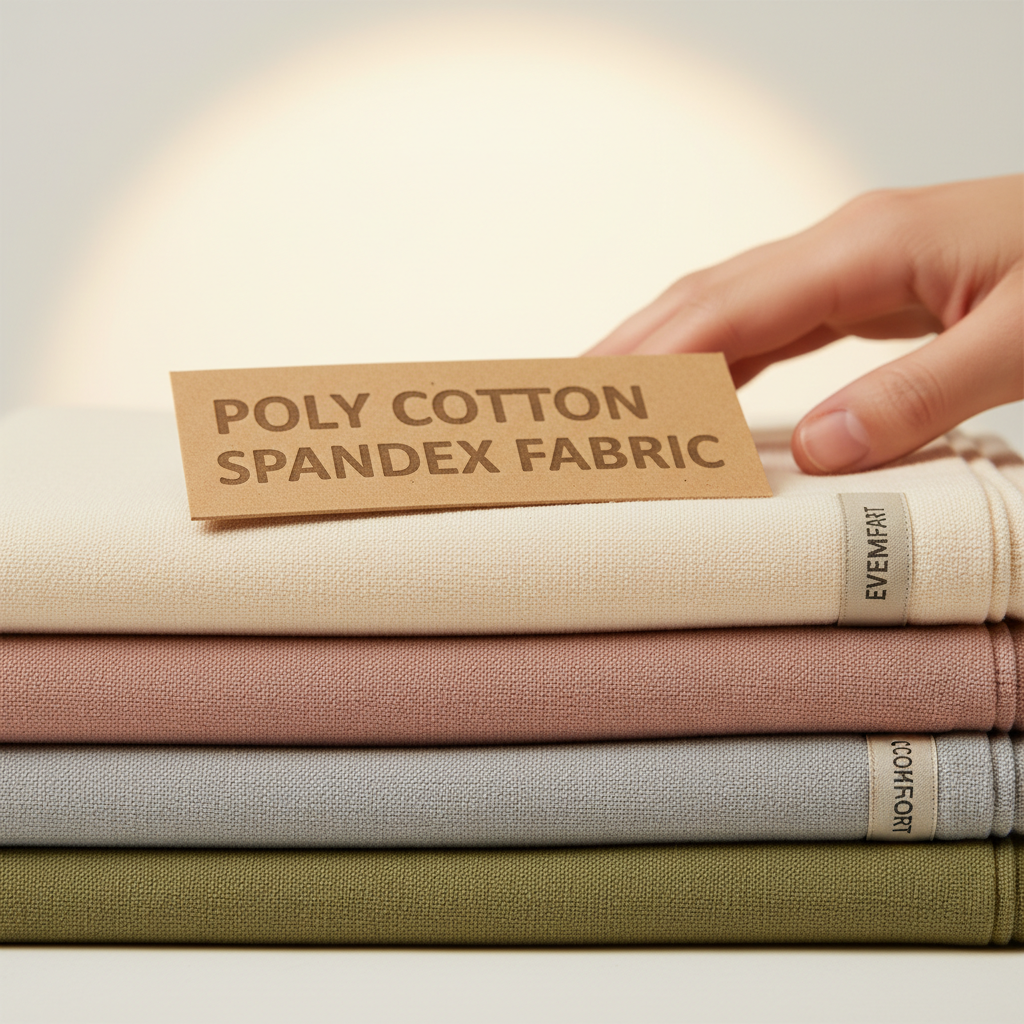
The textile industry has witnessed a paradigm shift in material engineering, leading to the rise of poly cotton spandex fabric as a cornerstone of modern apparel. By blending the breathability of natural cotton, the resilience of polyester, and the extraordinary elasticity of spandex, this hybrid material solves the age-old conflict between comfort and durability. Whether in high-performance activewear or professional corporate uniforms, the synergy of these three fibers creates a textile that adapts to the human form while maintaining its structural integrity over time.
Globally, the demand for versatile fabrics is skyrocketing as the lines between workwear and leisurewear blur. The integration of poly cotton spandex fabric allows manufacturers to produce garments that are not only easy to maintain—resisting wrinkles and shrinking—but also provide the dynamic stretch required for an active lifestyle. This material is no longer just a niche choice for athletic gear; it is now a strategic asset for any brand seeking to balance cost-efficiency with a premium tactile experience.
Understanding the technical nuances of this fabric blend is essential for designers and procurement specialists who aim to optimize garment longevity and wearer satisfaction. From the precise ratio of polyester to cotton to the percentage of spandex required for optimal recovery, every variable impacts the final product's performance. This guide explores the comprehensive ecosystem of this material, detailing its global relevance, core technical components, and the future innovations driving the textile sector toward a more sustainable and flexible future.
Global Relevance of Poly Cotton Spandex Fabric
The global textile market has seen a significant surge in the adoption of poly cotton spandex fabric, driven by a worldwide shift toward "athleisure" and functional workwear. According to industry trends aligned with ISO standards for textile performance, the blend's ability to offer multi-directional stretch while remaining breathable has made it indispensable. In regions like Southeast Asia and North America, where climate variations and high-mobility job roles are common, this fabric provides a critical solution for garments that must endure rigorous daily wear without losing their shape.
One of the primary challenges addressed by this material is the trade-off between the softness of natural fibers and the durability of synthetics. Traditional 100% cotton fabrics often suffer from sagging and excessive wrinkling, while pure polyesters can feel stifling and lack skin-friendliness. By integrating spandex into a poly-cotton matrix, manufacturers create a textile that solves these pain points, providing a "recovery" mechanism that ensures the garment snaps back to its original form, thereby extending the product lifecycle and reducing waste.
Technical Definition and Fiber Synergy
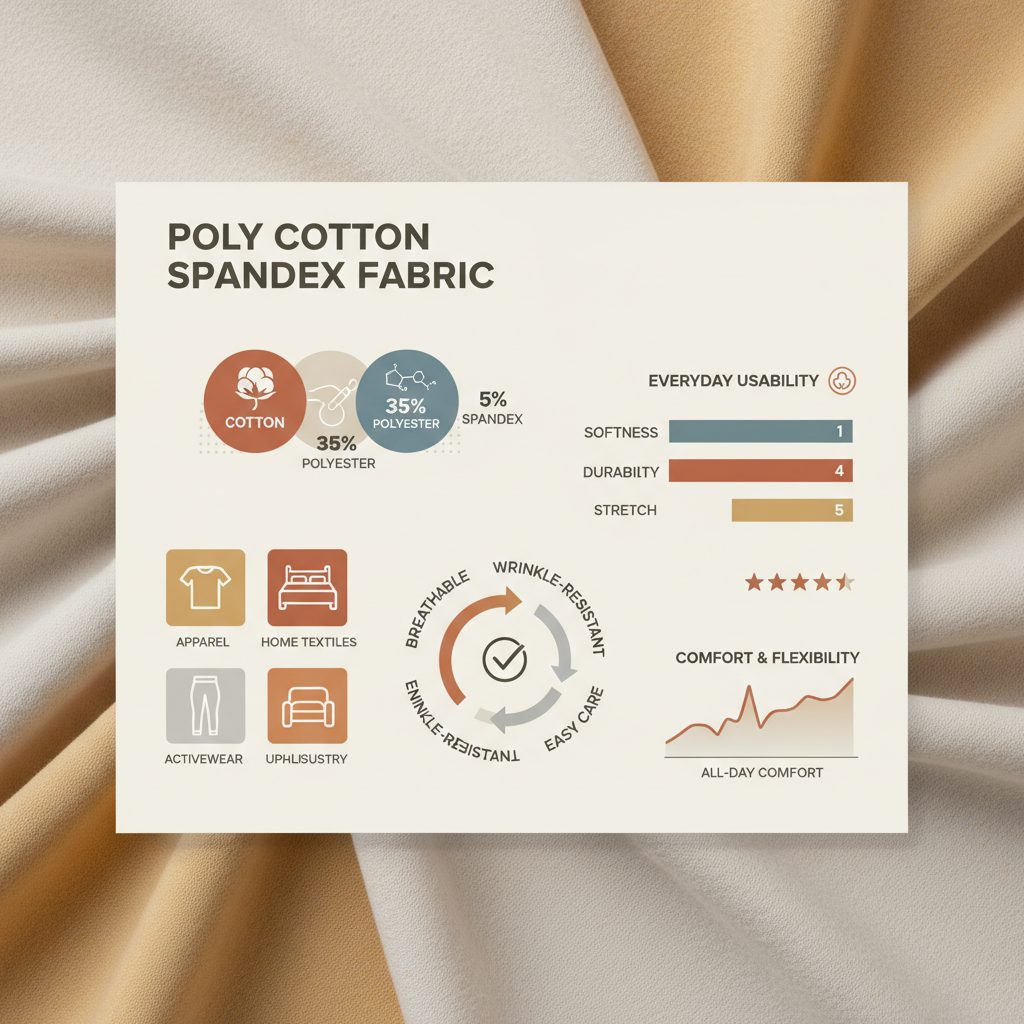
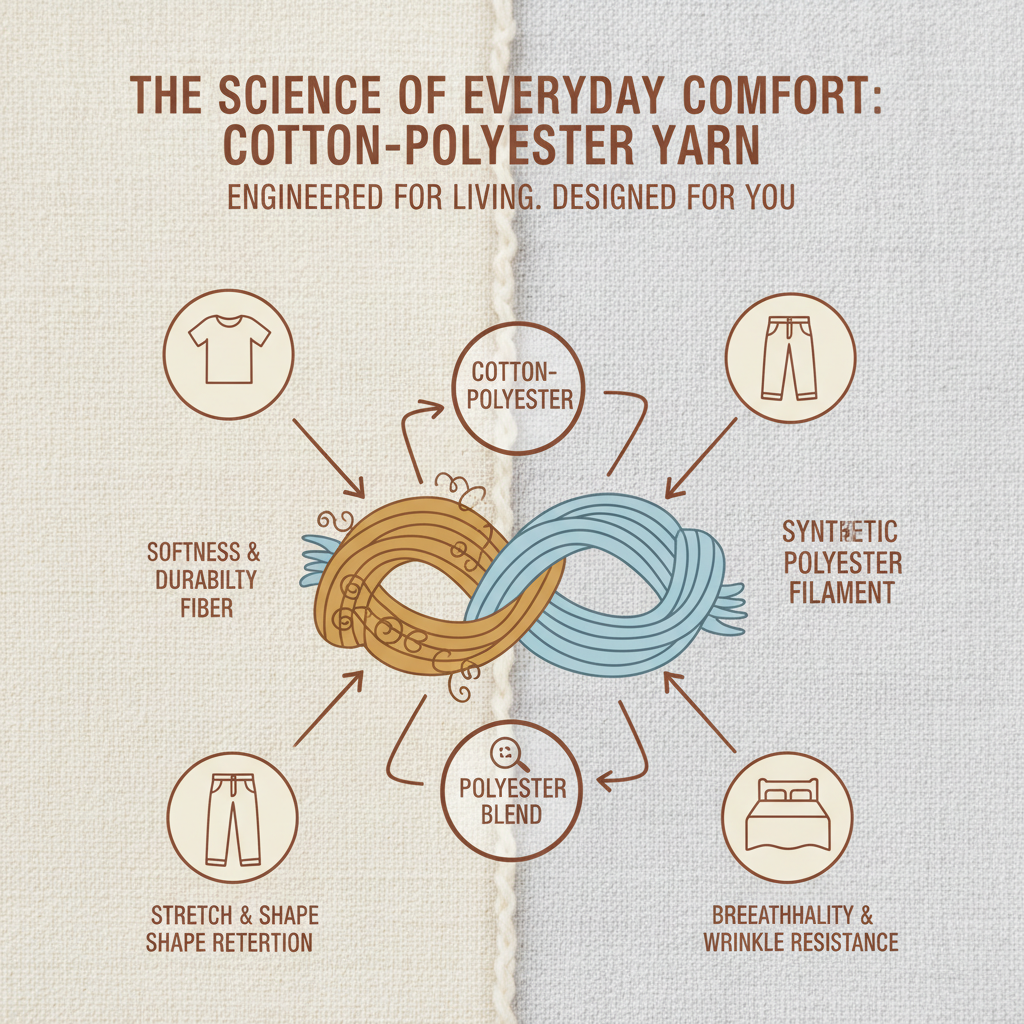
At its core, poly cotton spandex fabric is a tri-blend textile engineered to maximize the strengths of three distinct polymers. Polyester provides the "skeleton," offering high tensile strength, abrasion resistance, and quick-drying properties. Cotton contributes the "soul," providing hypoallergenic softness, moisture absorption, and a natural matte finish that appeals to consumers who dislike the plastic-like sheen of fully synthetic fabrics.
The "engine" of this blend is spandex (elastane), a synthetic fiber known for its exceptional elasticity. Even a small percentage of spandex—typically ranging from 3% to 12%—transforms the fabric from a static sheet into a dynamic membrane. This allows the fabric to stretch significantly beyond its resting length and return precisely to its original dimensions, a property known as elastic recovery. This synergy is what makes the fabric ideal for form-fitting clothing and high-stress areas like elbows and knees in uniforms.
From a manufacturing perspective, this blend is often produced using a core-spun technique or an intimate blend process. In core-spinning, the spandex filament is wrapped in cotton and polyester fibers, hiding the elastic core while maintaining the exterior feel of a natural fabric. This technical precision ensures that the wearer enjoys the comfort of a traditional textile while benefiting from the hidden power of modern polymer science, making it a vital component in the evolution of medical fabrics and high-end shirting.
Core Performance Factors of the Blend
Durability is the first hallmark of poly cotton spandex fabric. The polyester component acts as a shield, preventing the cotton fibers from breaking down under friction. This results in a textile that can withstand hundreds of industrial wash cycles without significant pilling or thinning, which is essential for uniforms in the hospitality and medical sectors.
Moisture management is equally critical. While pure polyester can feel clammy, the cotton in the poly cotton spandex fabric blend wicks moisture away from the skin, while the polyester ensures that the moisture evaporates quickly. This balanced thermoregulation makes the fabric comfortable in both humid summer environments and conditioned indoor spaces.
Finally, the "dimensional stability" provided by the spandex ensures that the garment does not "bag out" over time. This scalability in fit is what allows a single size of clothing to accommodate various body types comfortably, reducing the need for excessive sizing variants in production and lowering the overall cost of inventory for garment manufacturers.
Industrial Applications and Global Use Cases
The versatility of poly cotton spandex fabric allows it to permeate diverse industries. In the medical field, it is utilized for scrubs that must be sterile and durable yet flexible enough to allow surgeons and nurses to move freely during long shifts. In the corporate world, it has revolutionized the "power suit," replacing rigid fabrics with stretch-gabardine blends that offer a sharp, professional silhouette without sacrificing the wearer's mobility.
Beyond professional attire, this fabric is a staple in remote industrial zones where workers require clothing that can withstand harsh environments while providing ergonomic comfort. For instance, in logistics and warehousing, trousers made from this blend prevent the tearing commonly associated with pure cotton while providing the stretch necessary for frequent bending and lifting.
Performance Comparison of Poly Cotton Spandex Blend Variants
Long-Term Value and Economic Advantages
Investing in poly cotton spandex fabric offers significant long-term economic value for both the producer and the end consumer. For brands, the fabric's resistance to shrinkage and wrinkling reduces the rate of product returns and enhances brand trust. The ability to use a single, versatile fabric across multiple product lines—from pocketing fabrics to outer shells—simplifies the supply chain and allows for bulk procurement discounts.
From the consumer's perspective, the value lies in the "cost-per-wear" ratio. Because this blend resists the structural degradation typical of 100% natural fabrics, garments last significantly longer. This longevity is not just a financial win but an emotional one; users develop a trust in clothing that maintains its fit and aesthetic appeal even after years of rigorous use, fostering a deeper loyalty to the manufacturer.
Future Trends in Sustainable Elastic Textiles
The future of poly cotton spandex fabric is inextricably linked to the green revolution. The textile industry is currently transitioning toward recycled polyester (rPET) and organic cotton to reduce the carbon footprint of this popular blend. Innovation is now focused on "circularity," where the challenge is to develop new chemical recycling methods that can separate spandex from the poly-cotton matrix, allowing the fibers to be repurposed indefinitely.
Digital transformation is also playing a role through the implementation of 3D knitting and automated precision cutting. These technologies minimize fabric waste during the production of stretch garments, ensuring that every inch of the high-value blend is utilized. By combining AI-driven demand forecasting with sustainable sourcing, manufacturers can produce exactly what is needed, eliminating the surplus that often ends up in landfills.
Furthermore, we are seeing the emergence of "smart" poly cotton spandex fabric integrated with conductive yarns. These fabrics can monitor wearer biometrics or adjust their thermal properties in real-time, pushing the material beyond simple apparel into the realm of wearable technology. This evolution ensures that the blend remains at the cutting edge of both fashion and function.
Overcoming Manufacturing Challenges
Despite its benefits, producing poly cotton spandex fabric presents unique technical challenges. One of the most common issues is "grin-through," where the spandex filaments become visible on the surface of the fabric after excessive stretching. To solve this, expert mills use a tighter cover-yarn technique and optimized dyeing processes to ensure a seamless, uniform color across both the elastic and non-elastic fibers.
Another hurdle is the tension control during the weaving and knitting process. Because spandex is highly volatile, inconsistent tension can lead to "barring" or uneven streaks in the fabric. The solution lies in the adoption of precision servo-motors and real-time tension monitoring systems that adjust the feed rate millisecond by millisecond, ensuring a consistent hand-feel and stretch recovery across the entire bolt of fabric.
Finally, the dyeing of tri-blends requires a dual-dyeing approach since polyester and cotton react to different chemical agents. Disperse dyes are used for the polyester, while reactive dyes are used for the cotton. Achieving a perfect color match requires a sophisticated chemical balance and precise temperature control, which is why partnering with a seasoned manufacturer is critical for maintaining brand consistency.
Comparative Analysis of Poly Cotton Spandex Blend Specifications
| Blend Ratio (Poly/Cot/Span) |
Primary Benefit |
Stretch Recovery |
Recommended Use |
| 65% / 32% / 3% |
High Durability |
Moderate |
Corporate Uniforms |
| 50% / 45% / 5% |
Maximum Softness |
Good |
Premium T-shirts |
| 80% / 15% / 5% |
Quick-Dry / Strong |
Excellent |
Activewear/Gym gear |
| 60% / 30% / 10% |
High Elasticity |
Superior |
Compression Wear |
| 70% / 25% / 5% |
Wrinkle Resistance |
High |
Medical Scrubs |
| 40% / 50% / 10% |
Skin-Friendly Stretch |
Very High |
Loungewear |
FAQS
The ideal percentage depends on the intended use. For standard uniforms, 3-5% spandex is sufficient to provide comfort and movement. For activewear or form-fitting garments, 8-12% is preferred to ensure high compression and superior elastic recovery. Exceeding 15% may compromise the fabric's breathability and increase the risk of "grin-through."
It is significantly more durable. The polyester fibers prevent the fabric from tearing and pilling, while the spandex prevents the "bagging" effect seen in 100% cotton elbows and knees. Additionally, the blend is much more resistant to shrinking during high-temperature washes, making it a more sustainable long-term choice for heavy-duty use.
Yes, because of the cotton component. While pure polyester can be stifling, the cotton in this blend absorbs moisture from the skin, and the polyester helps move it to the surface for faster evaporation. This balanced moisture-wicking capability makes it an excellent choice for year-round apparel, provided the fabric weight (GSM) is chosen correctly for the season.
Absolutely. It is widely used for medical scrubs because it combines the hygiene and strength of polyester with the flexibility of spandex. This allows healthcare professionals to perform a wide range of motions without restriction, while the fabric remains resistant to the frequent, harsh sterilization washes required in clinical environments.
To maintain the integrity of the spandex, avoid using high-heat dryers or industrial irons directly on the fabric. High heat can "burn" or break the elastane filaments, leading to a loss of stretch. We recommend washing in cool or lukewarm water and tumble drying on a low setting or air-drying to maximize the garment's lifespan.
Yes, many manufacturers now offer versions using GRS-certified recycled polyester and GOTS-certified organic cotton. While spandex is traditionally petroleum-based, the shift toward recycled components significantly reduces the overall environmental impact and carbon footprint of the production process.
Conclusion
The emergence of poly cotton spandex fabric represents a critical evolution in textile engineering, successfully bridging the gap between aesthetic appeal, wearer comfort, and industrial-grade durability. By leveraging the unique properties of three distinct fibers, this material provides a scalable solution for a vast array of applications—from the precision of medical scrubs to the versatility of modern activewear. Its ability to maintain shape, resist wear, and regulate moisture ensures that it remains the gold standard for functional apparel globally.
Looking forward, the continued integration of sustainable materials and smart-textile technology will only enhance the value of this blend. For designers and procurement managers, the key to success lies in selecting the precise fiber ratio that aligns with the end-user's needs. As we move toward a more circular economy, the adoption of recycled poly-cotton-spandex blends will be pivotal in reducing the industry's environmental impact without compromising on performance. To explore high-quality fabric solutions, visit our website: www.jiexiangtextile.com.