100 pre shrunk cotton. It's more than just a fabric spec – it’s a game-changer for anyone dealing with clothing production, especially when you're trying to hit consistent sizing across multiple runs. I've seen firsthand the headaches caused by shrinkage, from wasted materials and re-work to unhappy customers and lost profits. You spend all this time sourcing the right fiber, perfecting the weave, and then boom – the finished garment doesn't fit. Pre-shrinking takes that gamble off the table, delivering a predictable end product that saves time, money, and a whole lot of frustration. It’s a deceptively simple solution to a consistently irritating problem.
For years, we wrestled with variations in finished sizes, constantly adjusting patterns and hoping for the best. It was a constant back-and-forth, a guessing game that ate into margins. Pre-shrunk cotton isn't a luxury; it's a foundational element for efficient production. Think about it – less waste means lower costs, faster turnaround, and a higher quality finished product. I’ve been on sites where entire batches had to be scrapped due to inconsistent shrinkage, and believe me, you don’t want to be there.
And it’s not just about cost. It's about building a reputation for reliability. Customers expect a consistent fit, wash after wash. Providing that peace of mind builds trust and fosters loyalty. We've seen a marked increase in repeat business since making the switch to exclusively using 100 pre shrunk cotton. It’s a small change with a significant impact.
The Importance of 100 Pre-Shrunk Cotton
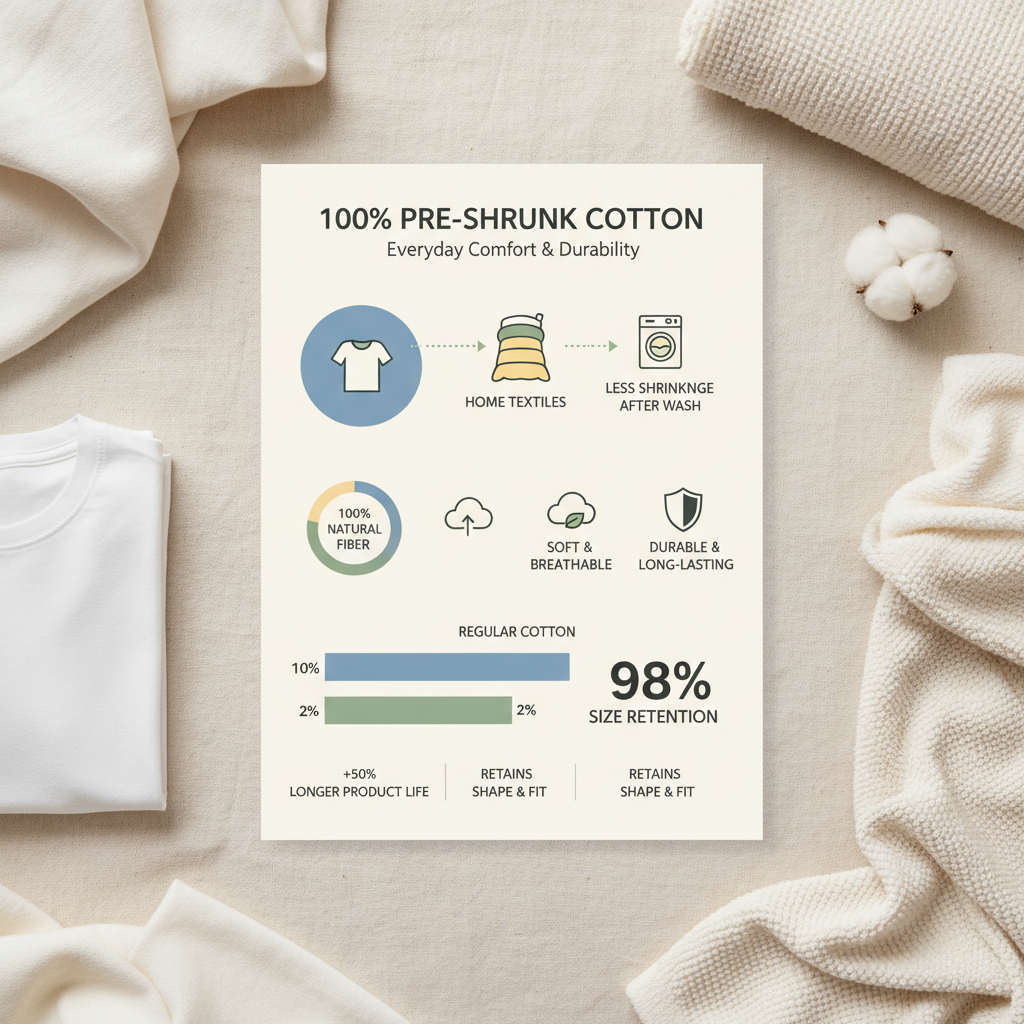
From the factory floor to the end consumer, dimensional stability is critical. We’ve all been there – you buy a new shirt, wash it once, and it's suddenly too small. That’s a design flaw, sure, but often it’s a problem with the fabric itself. 100 pre shrunk cotton solves this by undergoing a controlled shrinking process before it’s cut and sewn. This means the garment you receive will maintain its size and shape, wash after wash. It’s a basic principle, but often overlooked.
It’s also about reducing waste. When you account for shrinkage in the pattern-making process, you’re often cutting larger pieces than necessary. That excess fabric ends up on the shop floor. With 100 pre shrunk cotton, you can optimize your cuts, minimize waste, and improve your bottom line. Every little bit helps, especially in today's market.
Understanding the Pre-Shrinking Process
Pre-shrinking isn’t just dunking fabric in water. There are different methods, each with its pros and cons. Some mills use a simple hot water wash and tumble dry. Others employ more sophisticated techniques like sanforization, a mechanical process that compresses the fabric under heat and tension. Sanforization is generally considered more effective and provides a higher degree of shrinkage control. We've tested various methods, and sanforized cotton consistently delivers the best results for our product lines.
The key is controlling the variables – water temperature, drying time, and tension. It's a delicate balance, and quality control is paramount. You need a reliable partner who understands the process and can consistently deliver fabric that meets your specifications. A poorly executed pre-shrinking process can actually damage the fabric, weakening the fibers and compromising the quality.
It's worth noting that even with pre-shrinking, a small amount of shrinkage can still occur with the first wash. That's why it's always a good idea to build a slight tolerance into your patterns, just to be safe. But the difference between a 3-5% shrinkage with pre-shrunk cotton versus a 10-15% shrinkage with untreated cotton is massive.
Key Factors Affecting 100 Pre-Shrunk Cotton Quality
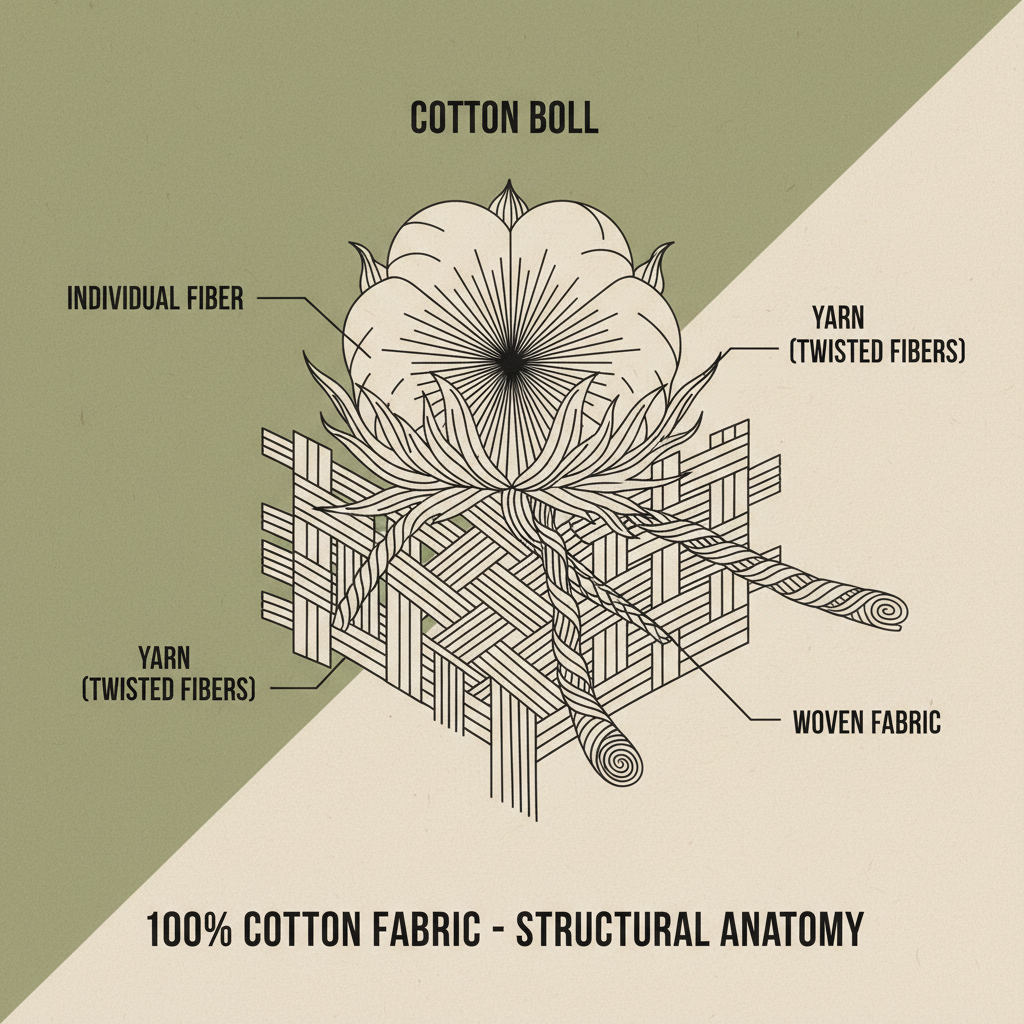
The quality of the raw cotton itself is the first factor. Longer staple cottons generally shrink less and produce a smoother, more durable fabric. The weaving or knitting process also plays a role. Tightly woven fabrics are more resistant to shrinkage than looser weaves. The yarn count, or the thickness of the yarn, also impacts dimensional stability.
The finishing process is critical. In addition to pre-shrinking, fabrics can be treated with various chemicals to improve their performance. However, it's important to ensure these chemicals are environmentally friendly and don’t compromise the fabric’s breathability or softness. We’ve seen some finishes that dramatically reduce shrinkage, but at the cost of comfort. You need to find the right balance.
Finally, storage and handling matter. Fabric that's stored improperly – exposed to moisture or extreme temperatures – can be affected by shrinkage. It’s important to work with suppliers who have proper warehousing facilities and follow best practices for fabric storage. I’ve seen entire shipments ruined by poor storage conditions.
Durability & Performance of 100 Pre-Shrunk Cotton
One misconception is that pre-shrinking weakens the fabric. That’s not necessarily true. A well-executed pre-shrinking process actually stabilizes the fibers, making the fabric more resistant to stretching and distortion. This leads to a more durable garment that holds its shape over time.
We conduct rigorous testing on all our fabrics to ensure they meet our quality standards. We assess shrinkage after multiple washes, as well as colorfastness, strength, and abrasion resistance. 100 pre shrunk cotton consistently performs well in these tests, proving its durability and reliability.
100 Pre-Shrunk Cotton Performance Metrics
Global Applications and Industry Adoption
You see 100 pre shrunk cotton everywhere – t-shirts, sweatshirts, jeans, bedding, towels. Any garment or textile where maintaining size and shape is critical. It’s particularly important in the apparel industry, where consistency is key for mass production. We supply fabric to brands all over the world, and they all demand pre-shrunk cotton.
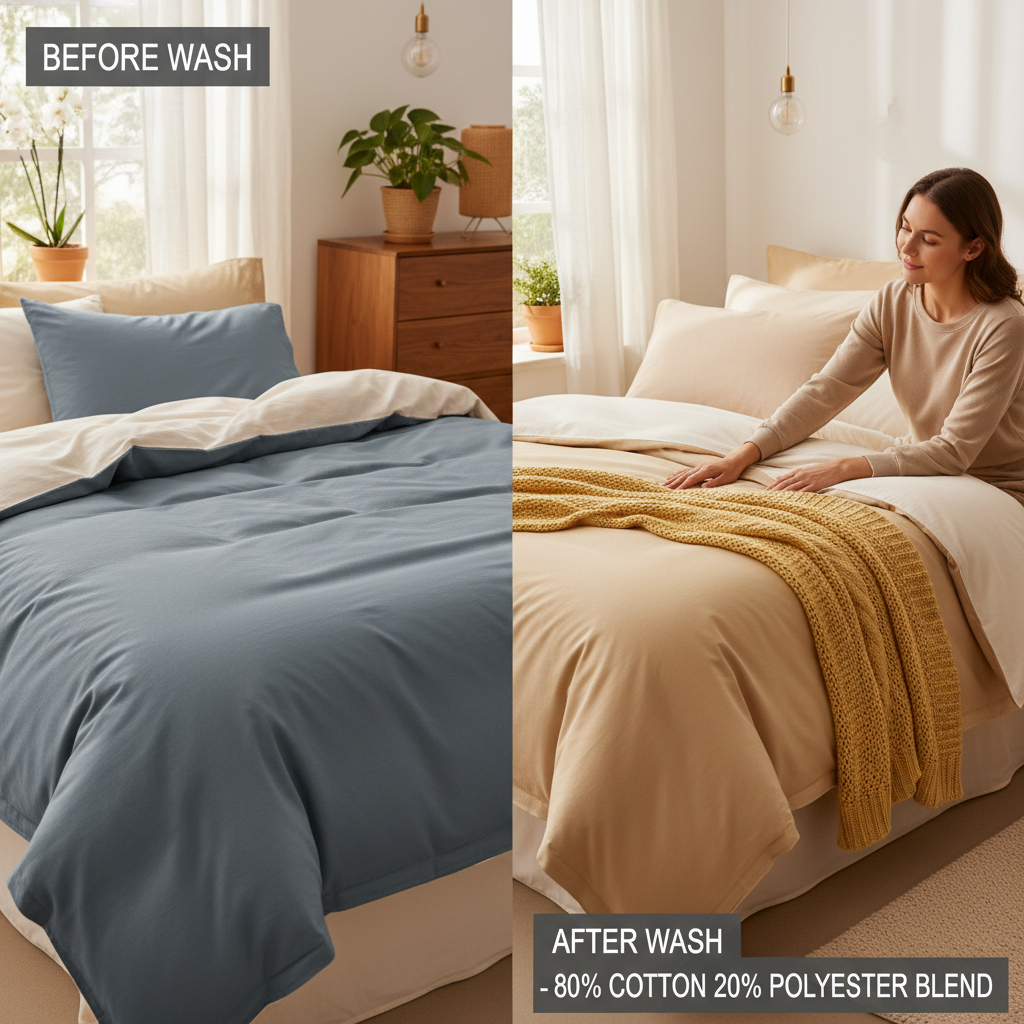
It’s also gaining traction in the home textiles market, where consumers are increasingly demanding products that maintain their appearance and feel after repeated washings. Think about fitted sheets – nobody wants a sheet that pops off the corners after one wash!
Advantages and Long-Term Value Proposition
The upfront cost of 100 pre shrunk cotton might be slightly higher than untreated cotton, but the long-term benefits far outweigh the initial investment. Reduced waste, fewer returns, increased customer satisfaction – these all translate into significant cost savings.
It's also about building a brand that stands for quality and reliability. Consumers are willing to pay a premium for products they can trust. By using pre-shrunk cotton, you're signaling to your customers that you care about the details and are committed to delivering a superior product.
Beyond the financial benefits, there’s a sustainability aspect. By reducing waste and improving product longevity, we're contributing to a more circular economy. That’s something we take seriously.
Future Trends and Innovations in 100 Pre-Shrunk Cotton
We're seeing advancements in pre-shrinking technologies that are even more gentle on the fabric and more effective at controlling shrinkage. New enzyme treatments are emerging that can further reduce shrinkage without compromising the fabric’s softness or drape.
There’s also a growing demand for organic and sustainable pre-shrunk cotton. Consumers are increasingly conscious of the environmental impact of their clothing, and they’re looking for products that are made with responsible materials and processes. We’re actively exploring partnerships with suppliers who are committed to sustainable farming practices.
I anticipate that we’ll see more automation in the pre-shrinking process, leading to greater efficiency and consistency. Digital monitoring and control systems will allow us to fine-tune the process and ensure that every batch of fabric meets our exacting standards.
Table Summarizing 100 Pre-Shrunk Cotton Quality Control
| Control Parameter |
Acceptable Range |
Testing Frequency |
Corrective Action |
| Shrinkage Rate (After 3 Washes) |
Maximum 3% |
Per Batch |
Reject Batch, Adjust Pre-Shrinking Parameters |
| Colorfastness to Washing |
Grade 4 or Higher |
Per Color, Per Batch |
Retest Dye Lot, Adjust Dyeing Process |
| Tensile Strength |
Minimum 20 lbs |
Per Batch |
Investigate Weave Structure, Adjust Tension |
| Fabric Weight (gsm) |
+/- 5% of Target |
Per Roll |
Adjust Knitting/Weaving Parameters |
| Skewness (Fabric Distortion) |
Maximum 2% |
Per Roll |
Adjust Tension, Review Loom Settings |
| Fiber Composition |
100% Cotton (Verified) |
Per Shipment |
Reject Shipment, Verify Supplier |
FAQS
Typically, you'll see a 5-15% increase in the per-yard cost of 100 pre shrunk cotton compared to untreated cotton. However, this is often offset by the reduced waste, fewer returns, and increased efficiency in the cutting and sewing process. From experience, the long-term savings far outweigh the initial cost difference.
While pre-shrinking is beneficial for most cotton fabrics, it’s particularly crucial for knits, which are more prone to shrinkage. Woven fabrics also benefit, but the impact is less dramatic. We’ve found it's essential for anything intended to be a fitted garment or where precise dimensions are critical.
A poorly executed process can leave residual shrinkage, damage the fibers, or even cause uneven shrinkage across the fabric. This can result in garments that still shrink after washing, or that are distorted or misshapen. That’s why choosing a reputable supplier with a proven track record is so important.
Ask for a shrinkage test report from the supplier. This report should detail the shrinkage rate after multiple washes, ideally to industry standards. Also, check their certifications and quality control procedures. A good supplier will be transparent about their process and happy to provide documentation.
A well-controlled process shouldn’t significantly affect the color or softness. However, harsh chemicals or excessive heat can damage the fibers and fade the color. We prioritize suppliers who use eco-friendly pre-shrinking methods that preserve the fabric’s natural properties.
A minimal amount of shrinkage is possible, typically less than 1-2% after the first wash. This is due to the natural properties of cotton fibers. Building a slight tolerance into your pattern design helps account for this minor shrinkage and ensures a perfect fit, even after repeated washings.
Conclusion
100 pre shrunk cotton isn’t just about avoiding headaches; it’s about building a more efficient, reliable, and sustainable production process. From reducing waste and improving quality control to enhancing customer satisfaction and building brand trust, the benefits are far-reaching. It’s a foundational element for any apparel or textile manufacturer who’s serious about delivering a superior product.
Looking ahead, we’ll continue to see innovations in pre-shrinking technologies and a growing demand for sustainable and ethically sourced materials. Investing in 100 pre shrunk cotton isn't just a smart business decision; it's an investment in the future of the industry. Visit our website today to learn more about our high-quality pre-shrunk cotton fabrics and how we can help you optimize your production process.