0%

Table of Contents

Cotton stripe fabric, a classic textile known for its enduring appeal, holds significant relevance in today’s global landscape. From apparel and home furnishings to industrial applications, its versatility and cost-effectiveness make it a mainstay in numerous industries. Understanding the nuances of this fabric – its production, properties, and applications – is crucial for designers, manufacturers, and consumers alike. It remains a cornerstone material for various needs worldwide.

The global cotton industry, a multi-billion dollar market, relies heavily on fabrics like cotton stripe. According to the UN Comtrade database, cotton accounts for a substantial portion of global textile trade, and striped patterns remain consistently popular. However, challenges exist, including sustainable sourcing and competition from synthetic alternatives. This underscores the importance of exploring innovative approaches to cotton production and fabric design, with cotton stripe fabric playing a vital role in bridging traditional techniques with modern demands.

Ultimately, a thorough comprehension of cotton stripe fabric empowers informed decision-making across the supply chain. It allows for the creation of durable, aesthetically pleasing, and ethically sourced products, meeting the evolving needs of a conscientious global market. From its historical roots to its modern applications, cotton stripe fabric continues to be a material of choice for many.
Exploring the Versatility and Enduring Appeal of Cotton Stripe Fabric

The Core Characteristics of Cotton Stripe Fabric

Exploring the Versatility and Enduring Appeal of Cotton Stripe Fabric

Cotton stripe fabric is distinguished by its distinctive striped pattern, created through the interlacing of colored or contrasting yarns. The stripes can vary greatly in width, color, and arrangement, offering a wide range of aesthetic possibilities. This versatility makes it popular for a wide range of applications.

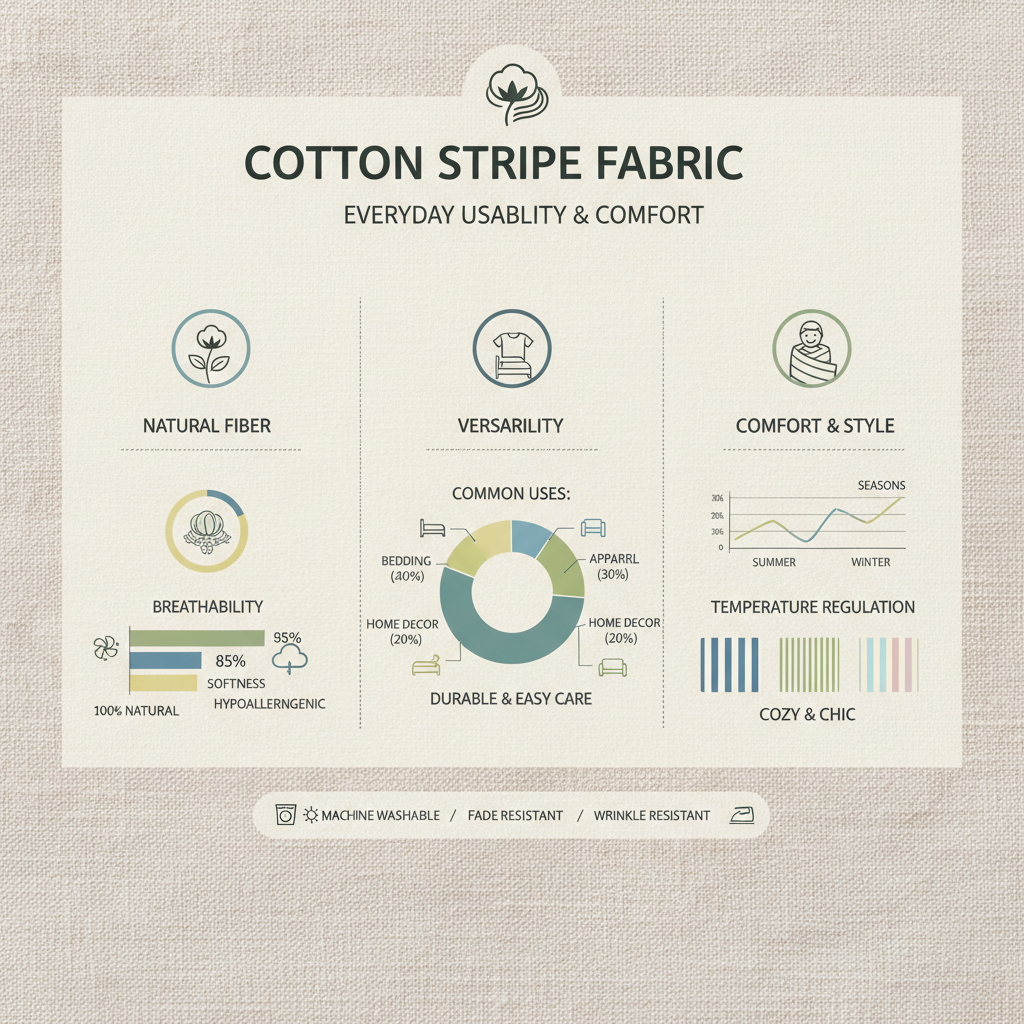
Beyond aesthetics, the fabric boasts inherent qualities of cotton: breathability, softness, and durability. These characteristics, combined with the visual appeal of the stripes, contribute to its lasting appeal. Depending on the weave and yarn count, cotton stripe fabric can range from lightweight and sheer to heavy and robust.

Historical Context and Evolution

The use of stripes in textiles dates back centuries, with evidence found in ancient civilizations across the globe. Initially, stripes were often associated with status or affiliation, denoting rank or tribal identity. Over time, the technique evolved, moving from simple bands to more complex designs.

During the Industrial Revolution, mechanized looms enabled the mass production of striped fabrics, making them more accessible to a wider population. Cotton stripe fabric gained particular prominence during this period due to the widespread availability of cotton and the efficiency of automated weaving processes.

Throughout the 20th and 21st centuries, cotton stripe remained a staple in fashion and home décor, adapting to changing trends while maintaining its classic appeal. Modern innovations in dyeing and finishing techniques have expanded the possibilities for creating unique and vibrant striped patterns.

Production Methods of Cotton Stripe Fabric

The creation of cotton stripe fabric typically involves several stages, beginning with yarn preparation. Cotton fibers are spun into yarns, which are then dyed or printed to achieve the desired colors for the stripes. This dyeing process often employs reactive dyes for vibrant and lasting color.

The weaving process is where the stripes are formed. Common weaving techniques include plain weave, twill weave, and rib weave. The pattern is created by alternating the colored yarns in the warp (lengthwise) and weft (crosswise) directions. Precise control of the loom is critical for achieving clean, well-defined stripes.

Following weaving, the fabric undergoes finishing processes such as desizing, scouring, and bleaching to remove impurities and prepare it for further treatment. Depending on the intended use, additional finishes may be applied to enhance properties like softness, wrinkle resistance, or water repellency.

Key Performance Indicators

Assessing the quality and suitability of cotton stripe fabric requires consideration of several key performance indicators. These metrics help manufacturers and buyers understand the fabric’s characteristics and predict its performance in various applications.

Important indicators include yarn count (affecting fabric weight and texture), tensile strength (indicating durability), colorfastness (resistance to fading), and shrinkage (dimensional stability after washing). Proper testing and adherence to industry standards are essential for ensuring consistent quality.

Performance Ratings of Cotton Stripe Fabric Weaving Methods


Diverse Applications Across Industries

The versatility of cotton stripe fabric extends across numerous industries. In the fashion sector, it’s widely used for creating shirts, dresses, skirts, and trousers, offering a classic and stylish aesthetic. Its breathability makes it particularly suitable for warm-weather clothing.

Beyond apparel, cotton stripe is popular in home textiles, finding application in bedding, curtains, upholstery, and tablecloths. The striped pattern adds visual interest and can complement a wide range of interior design styles. It's frequently utilized in the hospitality sector for linens and décor.

Sustainability and Ethical Considerations

The cotton industry, while significant, faces sustainability challenges related to water usage, pesticide application, and labor practices. Choosing organic cotton and supporting fair trade initiatives are crucial steps towards mitigating these impacts.

Sustainable production methods for cotton stripe fabric include utilizing water-efficient irrigation techniques, employing integrated pest management strategies, and ensuring fair wages and safe working conditions for all involved in the supply chain. Transparency and traceability are also key components of ethical sourcing.

Consumers are increasingly demanding eco-friendly and ethically produced textiles, driving manufacturers to adopt more responsible practices. Certification programs like GOTS (Global Organic Textile Standard) and Fairtrade International provide assurance of sustainability and ethical sourcing.

Future Outlook and Emerging Trends

The future of cotton stripe fabric lies in embracing innovation and sustainability. Developments in fiber technology, such as recycled cotton and blended fabrics, offer opportunities to reduce environmental impact.

Digital printing technologies are enabling more complex and customized striped patterns, allowing for greater design flexibility and reduced waste. Furthermore, advancements in finishing techniques are enhancing fabric performance and functionality, offering features like improved wrinkle resistance and stain repellency.

The increasing demand for sustainable and ethical textiles will continue to drive innovation in the cotton stripe fabric industry. Manufacturers who prioritize responsible sourcing and production practices will be best positioned to succeed in the evolving market.

A Summary of Key Trends Impacting Cotton Stripe Fabric Production and Application

Trend Category Impact on Production Impact on Application Adoption Rate (1-10)
Digital Printing Reduced water consumption, faster turnaround times. Highly customized designs, intricate patterns. 8
Organic Cotton Sourcing Increased production costs, stricter certification requirements. Premium product positioning, appeal to eco-conscious consumers. 7
Recycled Cotton Fibers Requires specialized processing, potential for fiber degradation. Reduced reliance on virgin cotton, lower environmental footprint. 6
Smart Textile Integration Requires integrating conductive yarns, increased complexity. Wearable technology applications, enhanced functionality. 4
Waterless Dyeing Techniques High initial investment, requires specialized equipment. Significant water savings, reduced pollution. 5
AI-Powered Design Requires skilled operators, data analysis expertise. Faster design cycles, optimized pattern generation. 3

FAQS

What is the typical lifespan of clothing made from cotton stripe fabric?

The lifespan of clothing crafted from cotton stripe fabric varies depending on the quality of the cotton, the weave, and how frequently it’s worn and washed. High-quality cotton stripe, with proper care, can last for several years, even with regular use. Following care label instructions, such as washing in cold water and avoiding harsh detergents, significantly extends the fabric's life. Generally, you can expect good quality items to maintain their shape and color for 3-5 years.

How does cotton stripe fabric compare to polyester in terms of breathability?

Cotton stripe fabric is significantly more breathable than polyester. Cotton fibers are naturally porous, allowing air to circulate freely and wick away moisture. This makes it an excellent choice for warm-weather clothing and everyday wear. Polyester, being a synthetic fiber, traps more heat and moisture, potentially leading to discomfort. While polyester is more durable and wrinkle-resistant, it lacks the inherent breathability of cotton. Cotton stripe fabric remains the superior choice for comfort in warm climates.

Is cotton stripe fabric prone to shrinking?

Yes, cotton stripe fabric can shrink, especially after the first wash. This is due to the natural fibers contracting when exposed to water and heat. However, shrinkage can be minimized by pre-shrinking the fabric during the manufacturing process, washing garments in cold water, and tumble drying on a low heat setting. Following these precautions helps maintain the garment's original size and shape. Higher quality cotton stripes generally experience less shrinkage.

What are the best washing instructions for cotton stripe fabric?

To ensure the longevity of cotton stripe fabric, machine wash in cold water with a mild detergent. Avoid using bleach or fabric softeners, as they can damage the fibers and cause discoloration. Tumble dry on a low heat setting or hang to dry. Ironing is optional, but if needed, use a medium heat setting. Always check the care label for specific instructions, as different weaves and finishes may require different treatment.

Can cotton stripe fabric be used for outdoor applications?

While cotton stripe fabric isn’t inherently waterproof, it can be used for some outdoor applications, especially when treated with water-repellent finishes. It is often used for outdoor cushions, tablecloths, and awning covers, provided it’s protected from prolonged exposure to rain and sunlight. However, for long-term outdoor use, more durable and weather-resistant fabrics are generally recommended. Regular maintenance, such as cleaning and re-treating with water repellent, will help extend its lifespan outdoors.

Is organic cotton stripe fabric more expensive than conventional cotton stripe?

Generally, organic cotton stripe fabric is more expensive than conventionally grown cotton stripe. This is due to the more rigorous farming practices involved in organic cotton production, which include avoiding synthetic pesticides and fertilizers, and using sustainable land management techniques. These practices typically result in lower yields, increasing the cost of the raw material. However, the higher price reflects the environmental and social benefits of organic cotton, making it a worthwhile investment for consumers seeking sustainable and ethical products.

Conclusion

In conclusion, cotton stripe fabric remains a versatile and enduring textile with a rich history and a promising future. Its inherent qualities of breathability, softness, and durability, combined with its aesthetic appeal, make it a popular choice across a wide range of applications. From fashion and home décor to industrial uses, cotton stripe fabric continues to meet the evolving needs of consumers and manufacturers alike.

Looking ahead, embracing sustainable production practices and innovative technologies will be crucial for ensuring the long-term viability of the cotton stripe fabric industry. By prioritizing ethical sourcing, reducing environmental impact, and exploring new design possibilities, we can continue to enjoy the benefits of this classic textile for generations to come. Visit our website at www.jiexiangtextile.com to explore our range of cotton stripe fabrics.


William Davis

William Davis

William Davis is a Key Account Manager at Shijiazhuang Jiexiang Textile Co., Ltd., focusing on establishing and nurturing long-term partnerships with major retailers and apparel brands in the US. William is known for his proactive approach to customer service and his ability to anticipate client needs. He has a strong
Previous Exploring the Versatility and Benefits of the 70 30 Cotton Poly Blend Fabric
Next Exploring the Versatility and Benefits of 75 Polyester 25 Cotton Fabric