Cotton polyester blend fabric wholesale represents a cornerstone of the modern textile industry, impacting everything from apparel and home furnishings to industrial applications. Its prevalence stems from a unique combination of desirable properties, offering a balance between the comfort of natural cotton and the durability and cost-effectiveness of synthetic polyester. Understanding this blend is crucial for businesses involved in textile sourcing, manufacturing, and retail, as well as for consumers seeking quality and value in their purchases. This blend isn’t merely about mixing fibers; it’s about optimizing performance and accessibility in a globally connected marketplace.
The global demand for cotton polyester blend fabric wholesale is driven by factors like population growth, rising disposable incomes, and evolving fashion trends. According to the World Bank, the textile industry remains a significant contributor to GDP in many developing countries. However, the industry also faces challenges related to sustainability, ethical sourcing, and fluctuating raw material prices. This blend provides a viable solution for addressing some of these challenges by offering a more resource-efficient and cost-stable alternative to 100% cotton fabrics. Efficient wholesale sourcing is increasingly critical for businesses navigating these complexities.
The availability of readily accessible cotton polyester blend fabric wholesale solutions is vital for manufacturers aiming to meet diverse consumer needs and maintain competitive pricing. The strategic use of this fabric is directly linked to a company’s ability to respond rapidly to market changes and deliver consistent quality. From fast fashion to durable workwear, the versatility of this blend is a key driver of its continued success.
The Global Significance of cotton polyester blend fabric wholesale
The global market for textiles, and specifically for blends like cotton polyester, is immense. Data from the ISO (International Organization for Standardization) highlights the growing demand for standardized textile quality, which influences sourcing decisions for cotton polyester blend fabric wholesale. This fabric serves as a foundation for a significant portion of the clothing we wear and the textiles used in countless everyday products.
The increasing emphasis on fast fashion, coupled with the need for durable and affordable textiles, has cemented the position of cotton polyester blend fabric wholesale as a critical component of the supply chain. Sourcing from reputable wholesalers, like those offering consistently high-quality blends, is essential for meeting both consumer demand and industry standards.
Defining Cotton Polyester Blend Fabric Wholesale
Cotton polyester blend fabric wholesale refers to the bulk sale of fabrics composed of cotton and polyester fibers, typically ranging from 35/65 to 65/35 ratios. “Wholesale” signifies that the fabric is sold in large quantities, usually to manufacturers, retailers, or other businesses, rather than directly to individual consumers. This enables businesses to secure competitive pricing and reliable supply chains.
This blend isn't a single product but rather a category encompassing various weights, weaves, and finishes. The specific properties – such as softness, breathability, wrinkle resistance, and durability – are determined by the ratio of cotton to polyester and the manufacturing processes employed. Understanding these variations is crucial when selecting the appropriate fabric for a particular application.
Ultimately, cotton polyester blend fabric wholesale is a vital link in the global textile supply chain, connecting fiber producers with the industries that create finished products. Its accessibility and versatility make it a preferred choice for a wide range of textile applications.
Core Characteristics and Properties
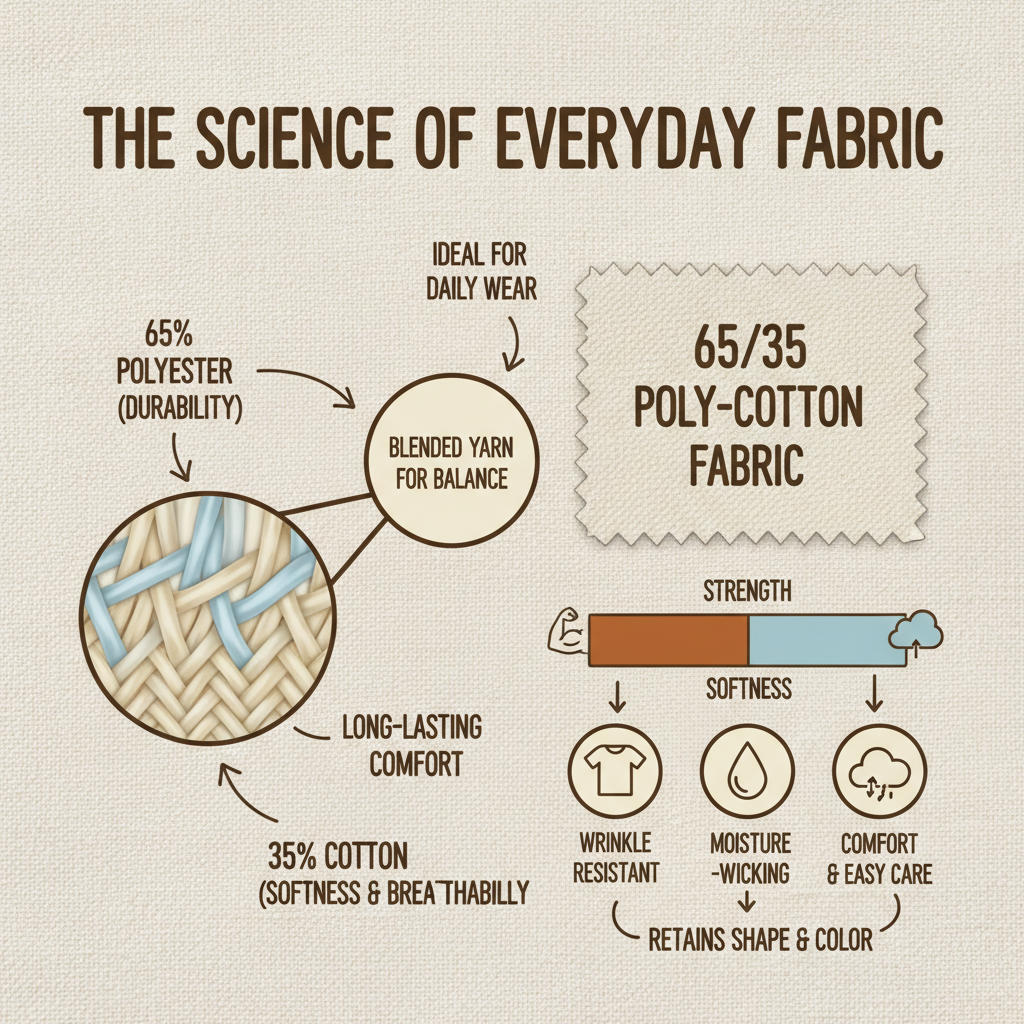
The popularity of cotton polyester blends lies in their combined advantages. Cotton provides comfort, breathability, and a natural feel, while polyester adds durability, wrinkle resistance, and cost-effectiveness. The blend mitigates the drawbacks of each fiber individually—cotton’s tendency to wrinkle and shrink, and polyester’s lack of breathability.
Specifically, a higher cotton content (e.g., 65/35) results in a softer, more breathable fabric ideal for apparel. Conversely, a higher polyester content (e.g., 35/65) creates a more durable, wrinkle-resistant fabric suitable for industrial uses or items requiring frequent washing. Choosing the right ratio is fundamental to achieving the desired performance characteristics.
Beyond the ratio, the weave (e.g., twill, poplin, jersey) also significantly impacts the fabric’s properties. Different weaves contribute to varying levels of drape, texture, and strength, further expanding the versatility of cotton polyester blend fabric wholesale.
Key Factors Influencing Quality
Several key factors determine the quality of cotton polyester blend fabric wholesale. Fiber quality is paramount. The type of cotton (e.g., long-staple vs. short-staple) and polyester (e.g., recycled vs. virgin) used directly impacts the fabric’s softness, strength, and durability. Sourcing fibers from reputable suppliers is essential.
Yarn construction plays a critical role. The fineness and twist of the yarn affect the fabric’s texture and strength. Tightly twisted yarns generally create a more durable fabric, while finer yarns result in a softer feel. The consistency of yarn quality is crucial for maintaining uniform fabric performance.
Quality Metrics for cotton polyester blend fabric wholesale
Global Applications and Market Sectors
Cotton polyester blend fabric wholesale finds applications across a diverse range of industries. Apparel is a major consumer, including t-shirts, sportswear, workwear, and uniforms. The blend's durability and affordability make it ideal for mass-produced clothing.
Home textiles represent another significant market. Bedding, towels, curtains, and upholstery fabrics commonly utilize this blend due to its ease of care and resistance to wear and tear. In post-disaster relief operations, the fabric is used for making tents and emergency shelters, demonstrating its practical utility.
Advantages and Economic Impact
The economic benefits of using cotton polyester blend fabric wholesale are substantial. Reduced production costs, compared to 100% cotton fabrics, allow manufacturers to offer competitive pricing. Increased durability translates to longer-lasting products, reducing the frequency of replacements and benefiting consumers.
The blend also contributes to sustainability by reducing the demand for water-intensive cotton cultivation. Utilizing recycled polyester fibers further enhances its environmental profile. Ethical sourcing and fair labor practices within the supply chain, coupled with these environmental benefits, build trust and brand reputation.
From a logistical standpoint, the blend is easy to transport and store, reducing shipping costs and streamlining supply chain management. This combination of cost savings, durability, and sustainability makes it a commercially advantageous choice.
Future Trends and Innovations
The future of cotton polyester blend fabric wholesale will likely involve a greater emphasis on sustainability. Innovations in recycled polyester production and the development of bio-based polyester alternatives will reduce the environmental impact. Digital printing technologies will enable customized designs and reduce textile waste.
Smart textiles, incorporating sensors and conductive yarns, are emerging as a potential application area. These fabrics can monitor physiological data or provide enhanced functionality in apparel and home textiles. Automation and AI-powered quality control systems will optimize production efficiency and ensure consistent fabric quality.
Policy changes favoring circular economy models, such as extended producer responsibility schemes, will also drive innovation and incentivize the use of sustainable materials in cotton polyester blend fabric wholesale production.
Summary of Key Challenges and Potential Solutions for cotton polyester blend fabric wholesale
| Challenge |
Impact on Wholesale |
Potential Solution |
Implementation Cost (1-10) |
| Fluctuating Raw Material Prices |
Reduced Profit Margins |
Long-Term Contracts with Suppliers |
6 |
| Supply Chain Disruptions |
Delayed Deliveries |
Diversification of Sourcing |
7 |
| Environmental Concerns |
Reputational Risk |
Increased Use of Recycled Materials |
8 |
| Quality Control Issues |
Increased Returns |
Automated Inspection Systems |
9 |
| Labor Rights Concerns |
Ethical Sourcing Challenges |
Supply Chain Transparency & Audits |
7 |
| Changing Consumer Preferences |
Demand for Specialized Blends |
Agile Manufacturing & Product Development |
5 |
FAQS
The most common composition ratios for cotton polyester blend fabric wholesale are 65/35 (65% polyester, 35% cotton) and 50/50. The 65/35 ratio prioritizes durability and wrinkle resistance, while the 50/50 blend offers a better balance of comfort and performance. Specific ratios can be customized based on the intended application. Factors like desired softness, breathability and cost influence the selection.
Generally, cotton polyester blend fabric wholesale is more cost-effective than 100% cotton fabrics. Polyester is less expensive to produce than cotton, making the blend a more economical choice, especially for large-scale production. The price difference can vary depending on the quality of the fibers used and the finishing processes applied, but blends generally offer significant cost savings.
Sustainability is a growing concern. Look for suppliers offering recycled polyester options or cotton sourced from sustainable farming practices. Consider the entire supply chain—from fiber production to dyeing and finishing—to minimize environmental impact. Certifications like GOTS (Global Organic Textile Standard) and Oeko-Tex can provide assurance of responsible sourcing and manufacturing.
A wide variety of finishes can be applied, including wrinkle-resistant, water-repellent, antimicrobial, and flame-retardant treatments. These finishes enhance the fabric’s performance characteristics and expand its potential applications. The choice of finish depends on the intended end-use of the fabric and the desired functionality.
The apparel industry utilizes cotton polyester blends extensively for t-shirts, polo shirts, workwear, uniforms, sportswear, and dresses. The fabric’s durability, wrinkle resistance, and affordability make it ideal for these applications. Different blends are chosen based on the desired properties, with higher cotton content for comfort and higher polyester content for performance.
Fabric weight (measured in GSM - grams per square meter) is crucial. Lighter weights (under 150 GSM) are suitable for breathable apparel like t-shirts, while heavier weights (over 200 GSM) are better for durable items like upholstery or workwear. Consider the intended use, desired drape, and durability requirements when selecting the appropriate fabric weight. Consult with your supplier for recommendations.
Conclusion
In conclusion, cotton polyester blend fabric wholesale remains a cornerstone of the global textile industry due to its versatile properties, cost-effectiveness, and adaptability to diverse applications. Its ability to combine the comfort of natural fibers with the durability and practicality of synthetics ensures its continued relevance in a rapidly evolving market. The careful consideration of blend ratios, fiber quality, and finishing processes is key to maximizing its potential.
Looking ahead, a focus on sustainability, innovation in fiber technology, and responsive supply chain management will be crucial for the future success of this fabric. Businesses seeking to leverage the benefits of cotton polyester blends should prioritize ethical sourcing, invest in quality control, and embrace emerging technologies. Visit our website: www.jiexiangtextile.com to explore our comprehensive range of cotton polyester blend fabrics and find the perfect solution for your needs.