Polyester cotton blend fabrics are ubiquitous in modern life, representing a significant intersection of textile science and global commerce. This versatile material, combining the strengths of both polyester and cotton fibers, has become a cornerstone of the apparel industry, home furnishings, and various industrial applications. Its prevalence isn’t accidental; the blend offers a compelling balance of comfort, durability, affordability, and ease of care, making it a highly sought-after textile worldwide.
The global demand for polyester cotton blend is driven by a complex interplay of economic factors, consumer preferences, and technological advancements. Manufacturing hubs in Asia, particularly China, India, and Bangladesh, dominate the production landscape, supplying both domestic markets and international exports. According to data from the World Bank, the textile industry represents a substantial portion of GDP in many developing nations, and polyester-cotton blends are a key component of this economic activity.
This widespread adoption addresses critical needs in clothing, healthcare and hygiene, and infrastructure. The affordability of this blend makes clothing more accessible, while its durability extends the lifespan of garments, reducing textile waste. Furthermore, the blend’s properties are adaptable to diverse uses, from protective workwear to soft bedding, showcasing its remarkable versatility and impact on daily life.
Introduction: Global or Industry Context
The polyester cotton blend dominates the textile industry due to its cost-effectiveness and versatility. Globally, approximately 60% of all textiles produced are some form of blended fabric, with polyester-cotton leading the charge. This is driven by increasing consumer demand for affordable clothing and household textiles in emerging economies, coupled with the scalability of polyester production. The United Nations estimates that the global textile and apparel market will continue to grow, further solidifying the position of polyester-cotton blends.
However, this widespread adoption isn’t without challenges. The reliance on petroleum-based polyester raises concerns regarding sustainability and environmental impact. The fast fashion industry, a significant consumer of polyester-cotton blends, contributes to textile waste and pollution. Therefore, developing more sustainable production methods and exploring alternative fiber sources is crucial for the long-term viability of this important textile.
Definition & Meaning
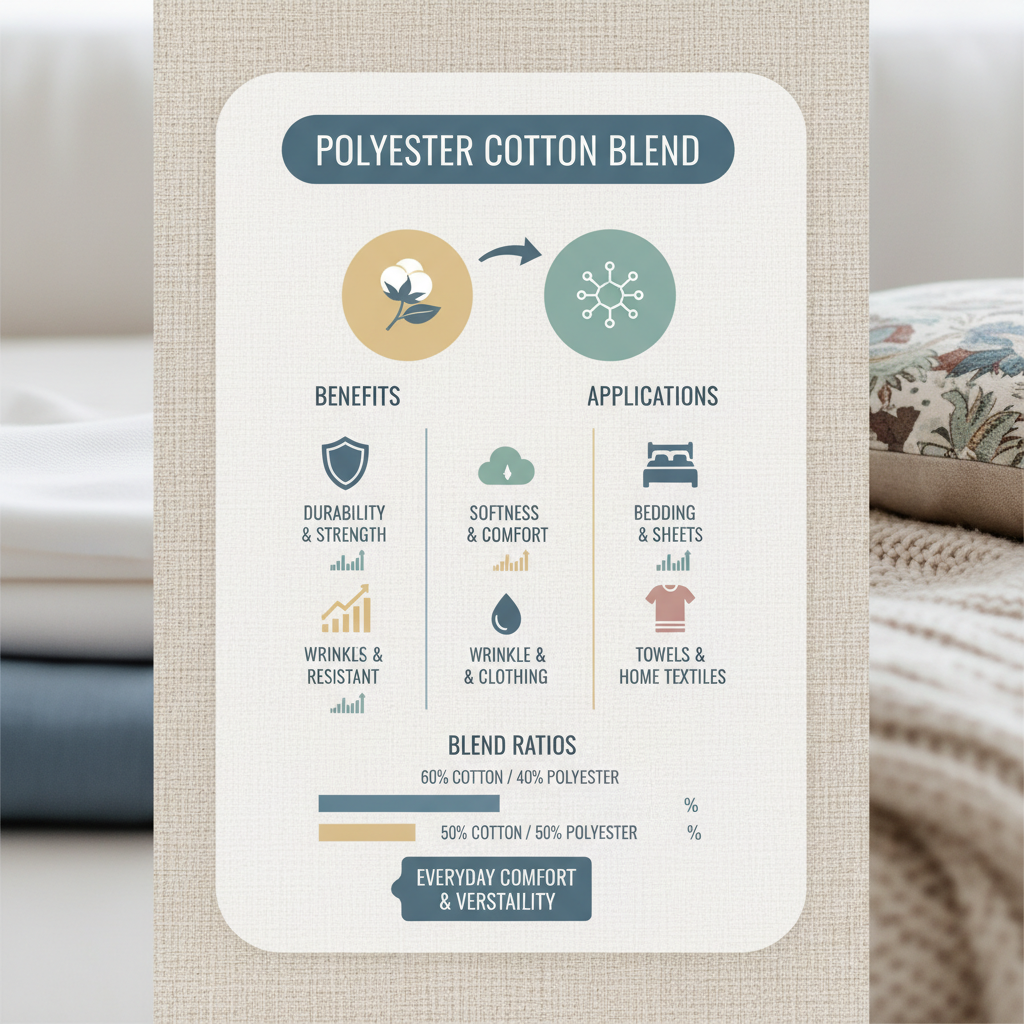
A polyester cotton blend is a fabric created by combining polyester and cotton fibers. Typically, blends range from 50/50 to 65/35 (polyester/cotton), although other ratios exist depending on the desired characteristics of the final fabric. Polyester provides strength, wrinkle resistance, and quick-drying properties, while cotton offers comfort, breathability, and a softer feel.
This blend directly addresses the need for practical and affordable textiles in a world striving for both comfort and durability. It's a solution that balances the benefits of natural fibers with the performance attributes of synthetic materials. The significance extends beyond mere clothing; it's used in medical textiles, industrial fabrics, and home textiles, contributing to various aspects of modern living.
The creation of polyester cotton blends is an essential part of modern industry, facilitating wider access to quality textiles and driving innovation in fabric technology. It's a prime example of how combining different materials can create something superior to its individual components, answering both practical requirements and catering to consumer demands.
Key Factors or Core Components
Durability: Polyester fibers significantly enhance the strength and resilience of the blend, making it resistant to abrasion, tearing, and general wear and tear. This is particularly important for workwear and items that require frequent washing. The higher the polyester content, generally, the greater the durability.
Cost-Efficiency: Polyester is generally less expensive to produce than cotton, making the blend a more affordable option for manufacturers and consumers alike. This cost advantage allows for wider accessibility to quality clothing and textile products. Sourcing polyester cotton blend directly from manufacturers further reduces costs.
Wrinkle Resistance: Polyester’s inherent wrinkle resistance minimizes the need for ironing, saving time and effort. This is a crucial benefit for consumers seeking easy-care fabrics. Blends with higher polyester content demonstrate greater resistance to creasing.
Breathability: The cotton component provides a degree of breathability, allowing air to circulate and preventing overheating. While not as breathable as 100% cotton, polyester-cotton blends offer a reasonable balance of comfort and performance.
Color Retention: Polyester fibers hold dye exceptionally well, resulting in vibrant and long-lasting colors. This is particularly beneficial for printed fabrics and garments that require frequent washing.
Easy Care: Polyester-cotton blends are generally machine washable and dryable, simplifying laundry routines and reducing the risk of damage.
Global Applications & Use Cases
The applications of polyester cotton blend are remarkably diverse. The apparel industry accounts for the largest share, utilizing the blend for t-shirts, jeans, shirts, dresses, and workwear. Its affordability and durability make it ideal for mass-produced clothing items. In the healthcare sector, the blend is used in surgical gowns, scrubs, and bedding due to its ease of sterilization and comfort.
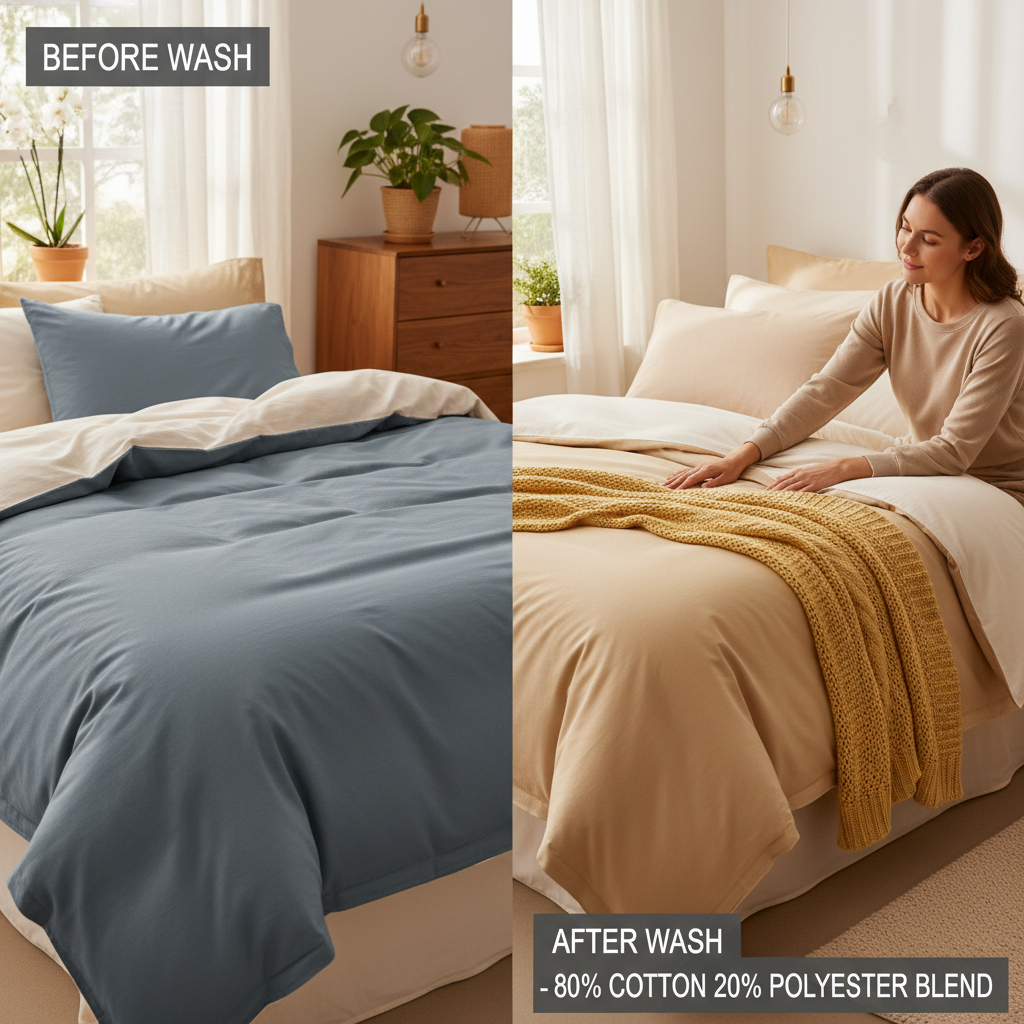
Home textiles, such as bed sheets, towels, and curtains, frequently employ polyester-cotton blends for their softness, wrinkle resistance, and ease of care. In industrial settings, the blend serves as a base for work uniforms, protective clothing, and filtration fabrics. These applications span across continents, with significant usage in manufacturing hubs across Asia, and in consumer markets globally.
In post-disaster relief operations, polyester-cotton blend tents and blankets provide crucial shelter and warmth. The material’s durability and resistance to mildew are essential in challenging environmental conditions. Furthermore, in remote industrial zones, the blend’s affordability and ease of maintenance make it an attractive option for employee uniforms and facility linens.
Polyester Cotton Blend Performance Across Applications
Advantages & Long-Term Value
The core advantage of polyester cotton blend lies in its cost-effectiveness. It provides a high-quality textile solution at a lower price point than many alternatives, making it accessible to a broader range of consumers and businesses. This affordability doesn’t compromise on performance; the blend delivers a desirable balance of comfort, durability, and ease of care.
From a sustainability perspective, while polyester presents challenges, the increased durability of the blend means garments last longer, reducing the frequency of replacement and minimizing textile waste. Furthermore, ongoing innovations in recycled polyester are further enhancing the environmental credentials of the blend. The long-term value lies not only in its economic benefits but also in its potential for a more responsible and circular textile economy.
Future Trends & Innovations
The future of polyester cotton blend is intrinsically linked to advancements in sustainable textile technology. Researchers are actively developing bio-based polyester alternatives derived from renewable resources, reducing reliance on fossil fuels. Furthermore, innovations in fiber recycling are enabling the creation of high-quality polyester from post-consumer waste, promoting a circular economy.
Digital printing technologies are also playing a significant role, allowing for more intricate designs and personalized fabrics with reduced water consumption and waste. Smart textiles, incorporating sensors and conductive fibers, are emerging applications for polyester-cotton blends, offering potential in healthcare, sports apparel, and industrial monitoring.
Challenges & Solutions
One of the primary challenges associated with polyester cotton blend is the environmental impact of polyester production and disposal. Microplastic shedding during washing is another concern, contributing to ocean pollution. However, solutions are emerging, including the development of biodegradable polyester alternatives and the use of filtration systems in washing machines to capture microplastics.
Another challenge is the potential for pilling, a common issue with blended fabrics. This can be mitigated through improved fiber selection, yarn construction techniques, and fabric finishing processes. Investing in research and development to enhance the performance and sustainability of polyester-cotton blends is crucial for overcoming these challenges.
Furthermore, greater transparency and traceability throughout the supply chain are essential for ensuring ethical and responsible production practices. Collaboration between manufacturers, brands, and consumers is key to driving positive change and fostering a more sustainable textile industry.
Summary of Challenges and Solutions for Polyester Cotton Blend
| Challenge |
Impact Level (1-5) |
Potential Solution |
Implementation Cost (1-5) |
| Polyester Production Environmental Impact |
5 |
Bio-based Polyester Alternatives |
4 |
| Microplastic Shedding |
4 |
Washing Machine Filters & Fiber Modification |
3 |
| Pilling & Durability |
3 |
Improved Fiber Selection & Yarn Construction |
2 |
| Supply Chain Transparency |
4 |
Blockchain Technology & Certification Schemes |
3 |
| Waste Management & Recycling |
4 |
Advanced Textile Recycling Technologies |
4 |
| Consumer Awareness & Demand |
3 |
Education & Marketing Campaigns |
2 |
FAQS
Polyester-cotton blends offer several advantages over 100% cotton. They are typically more durable, less prone to wrinkling, and dry faster. Polyester adds strength and resilience, while cotton provides comfort. This makes the blend ideal for garments that require frequent washing or use. The cost is often lower than 100% cotton due to the more affordable production of polyester.
The polyester/cotton ratio is usually indicated on the fabric label. Look for a percentage breakdown, such as "65% Polyester, 35% Cotton." If the label doesn’t specify, you can perform a burn test (with caution!) – polyester will melt and form a hard bead, while cotton will burn quickly and leave ash. However, this isn’t a precise method.
Polyester-cotton blends offer a reasonable level of breathability, though not as much as 100% cotton. The cotton component allows for some air circulation, preventing overheating. However, the breathability will vary depending on the specific blend ratio and fabric construction. Higher cotton content generally equates to better breathability.
Polyester-cotton blends are known for their excellent washability. Polyester fibers resist shrinking and fading, while cotton provides a soft hand feel that remains after multiple washes. The blend generally maintains its shape and color well, making it suitable for everyday wear. However, following care label instructions is crucial for optimal results.
Yes, there are increasingly sustainable options available. Look for fabrics made with recycled polyester, which reduces reliance on virgin petroleum. Additionally, some manufacturers are exploring bio-based polyester alternatives derived from renewable resources. Choosing organic cotton further enhances the sustainability of the blend.
Polyester cotton blends are used extensively in home textiles like bed sheets, towels, and curtains. They’re also found in industrial applications like work uniforms, medical gowns, and filtration fabrics. Their durability, affordability, and ease of care make them ideal for a wide range of non-apparel uses.
Conclusion
In conclusion, polyester cotton blend remains a cornerstone of the modern textile industry. Its unique combination of affordability, durability, comfort, and versatility makes it a preferred choice for a vast array of applications, from everyday apparel to specialized industrial uses. Understanding the core properties and ongoing innovations surrounding this blend is critical for businesses and consumers alike.
Looking ahead, the future of polyester-cotton blends hinges on advancements in sustainable production methods and the adoption of circular economy principles. By prioritizing recycled polyester, bio-based alternatives, and responsible manufacturing practices, we can unlock the full potential of this fabric while minimizing its environmental impact. Visit our website at www.jiexiangtextile.com to explore our range of polyester cotton blends and discover how we are leading the way in sustainable textile solutions.