The textile industry is constantly evolving to meet the demand for fabrics that balance comfort, durability, and flexibility. Among the most versatile blends emerged in recent years is 57 cotton 38 polyester 5 spandex, a precision-engineered composition designed to bridge the gap between natural breathability and synthetic resilience. By integrating the soft touch of cotton with the structural integrity of polyester and the elasticity of spandex, this fabric provides a high-performance solution for various garment applications globally.
Understanding the technical nuances of 57 cotton 38 polyester 5 spandex is crucial for designers and manufacturers who aim to optimize the user experience in apparel. This specific ratio ensures that the fabric does not lose its shape over time—a common failure in 100% cotton garments—while avoiding the "plastic" feel often associated with high-polyester blends. It represents a strategic equilibrium in textile engineering, catering to the modern consumer's need for "athleisure" and professional uniforms that move with the body.
From a global market perspective, the adoption of 57 cotton 38 polyester 5 spandex reflects a broader shift toward functional textiles. As ISO standards for garment durability and comfort become more stringent, manufacturers are turning to these tri-blend compositions to reduce waste and increase the lifecycle of the clothing. This approach not only improves cost-efficiency for the end-user but also aligns with sustainable industrial practices by creating longer-lasting, high-quality apparel.
The Compositional Engineering of 57 cotton 38 polyester 5 spandex
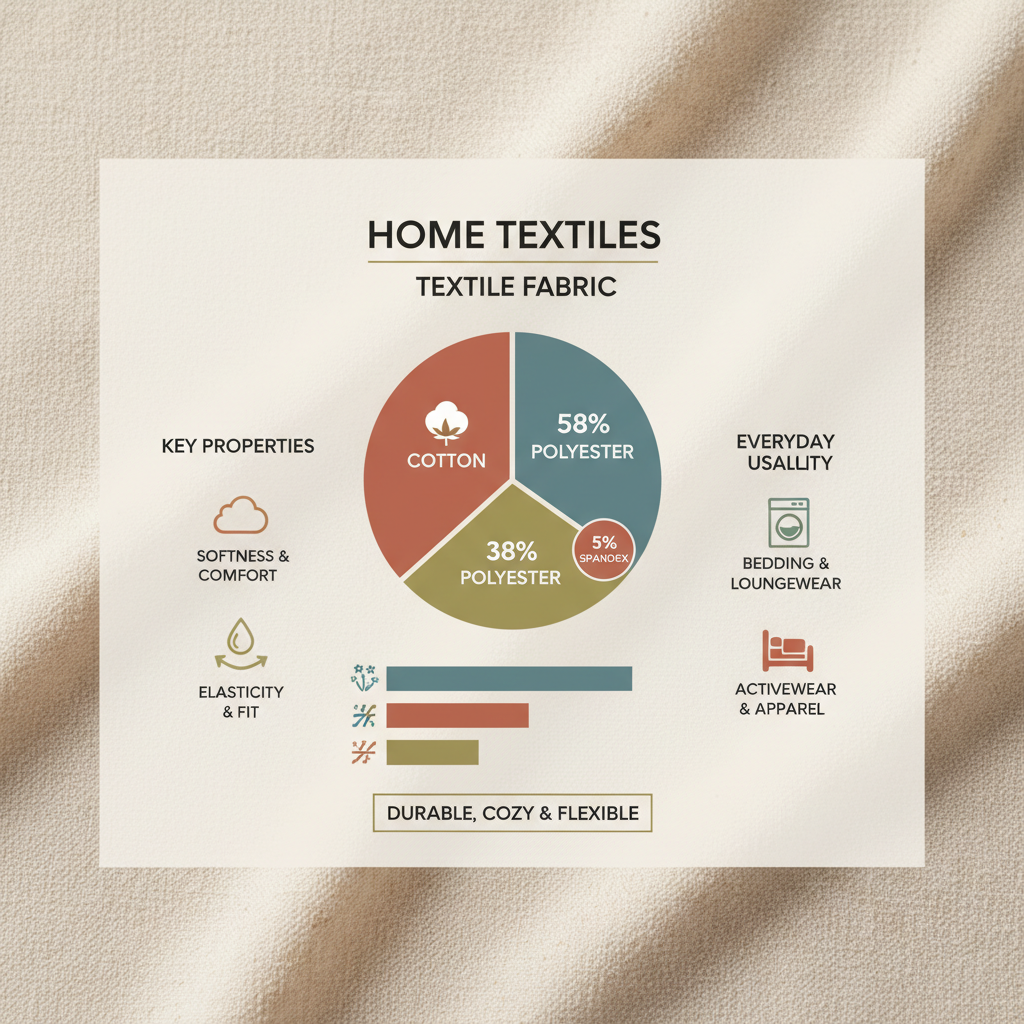
The core strength of 57 cotton 38 polyester 5 spandex lies in its synergistic blending process. The 57% cotton component provides the essential "hand-feel" and moisture absorption, ensuring that the wearer remains comfortable and the skin can breathe. This high cotton content is critical for garments that have direct skin contact, reducing the risk of irritation and improving thermal regulation across different seasons.
Complementing the cotton is the 38% polyester, which acts as the structural backbone. Polyester adds significant tensile strength and wrinkle resistance, ensuring that the fabric retains its crisp look even after multiple washes. Finally, the 5% spandex introduces the "power stretch" capability, allowing the fabric to expand and recover its original shape without bagging at the elbows or knees, making this blend indispensable for modern active-wear and uniforms.
Industrial Relevance and Global Demand
On a global scale, the demand for 57 cotton 38 polyester 5 spandex has surged due to the rise of the "hybrid wardrobe." With the lines between office wear and home wear blurring, there is a critical need for materials that look professional but feel like leisurewear. This blend addresses the problem of "fabric fatigue," where traditional cotton fabrics wear out too quickly in high-friction industrial environments.
Statistical trends in the textile sector indicate that blended fabrics are outpacing single-fiber textiles in growth. The integration of 57 cotton 38 polyester 5 spandex allows manufacturers to hit a "sweet spot" in pricing and performance. By reducing the total cotton percentage slightly and adding synthetic reinforcements, brands can offer a more durable product that appeals to the middle-market consumer who values both quality and longevity.
Furthermore, international shipping and logistics standards have pushed for fabrics that are easier to pack and maintain. Because 57 cotton 38 polyester 5 spandex is naturally more resistant to creasing than pure cotton, it reduces the need for heavy steaming and ironing upon arrival at retail destinations, thereby lowering the overall carbon footprint of the supply chain.
Material Properties and Performance Metrics
When analyzing the physical properties of 57 cotton 38 polyester 5 spandex, the most striking metric is its dimensional stability. Unlike pure cotton, which can shrink significantly during the first few wash cycles, the polyester component locks the fibers in place, ensuring the garment fits the same way on day one as it does on day one hundred.
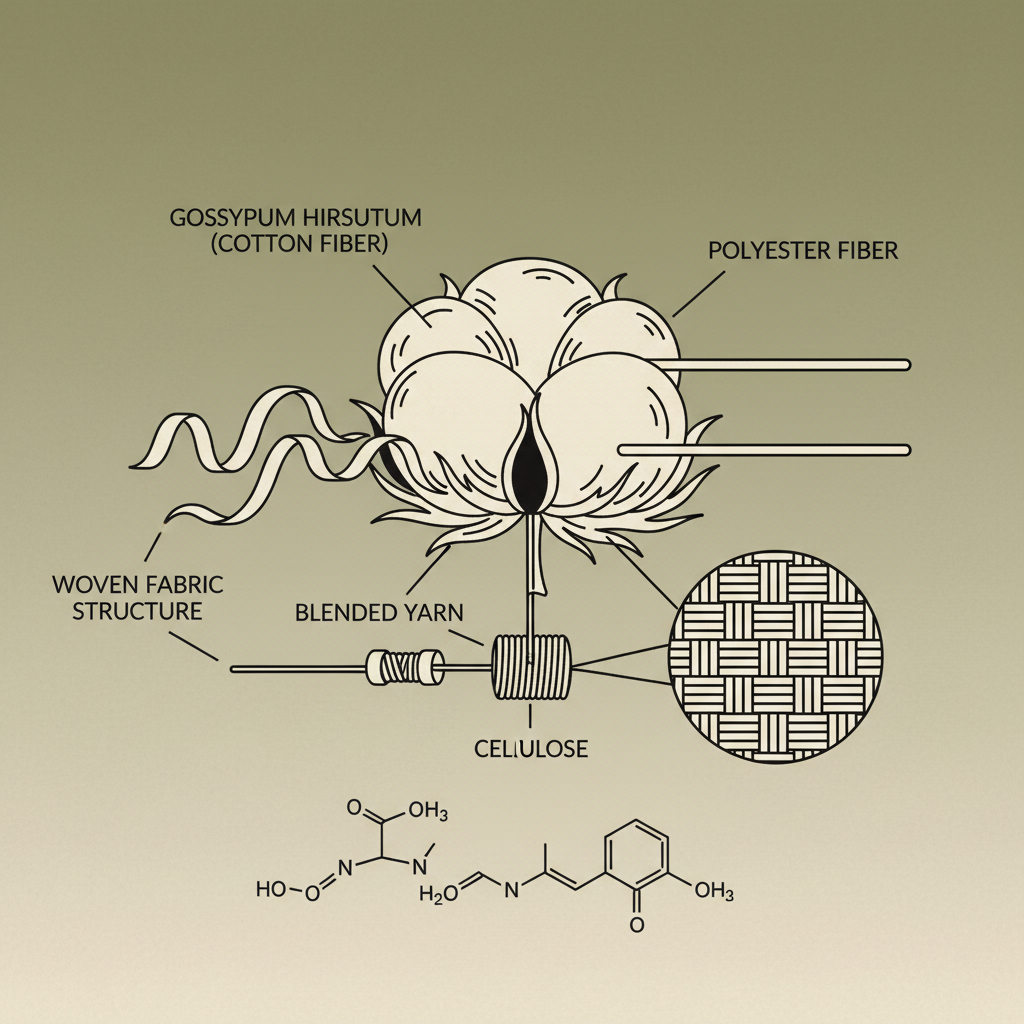
The moisture-wicking capability of 57 cotton 38 polyester 5 spandex is a result of the capillary action created between the hydrophilic cotton and hydrophobic polyester fibers. This allows sweat to move away from the skin toward the outer surface of the fabric where it can evaporate more quickly, providing a cooling effect essential for high-activity environments.
Finally, the elasticity provided by the 5% spandex ensures a high "recovery rate." In textile testing, 57 cotton 38 polyester 5 spandex consistently scores high in stretch-and-recovery tests, meaning it can withstand repeated stretching during movement without permanent deformation, which is vital for ergonomic garment design.
Comparative Analysis of Fabric Blends
To truly appreciate the value of 57 cotton 38 polyester 5 spandex, one must compare it to traditional alternatives. While 100% cotton is soft, it lacks the durability and stretch needed for industrial use. Conversely, 100% polyester can feel stifling and lacks the breathability required for long-term wear. This specific blend optimizes the strengths of each fiber while mitigating their weaknesses.
The addition of spandex is the "secret ingredient" that separates this blend from standard CVC (Chief Value Cotton) fabrics. While a standard cotton-poly blend might be stiff, the 57 cotton 38 polyester 5 spandex mix offers a fluid drape and a snug fit that contours to the body, making it a preferred choice for high-end uniforms and medical scrubs.
Performance Comparison of 57 cotton 38 polyester 5 spandex Variants
Diversified Application Scenarios
The versatility of 57 cotton 38 polyester 5 spandex makes it a staple across multiple industries. In the medical field, it is frequently used for high-quality scrubs that require a balance of sterile durability and comfort for long shifts. The fabric's ability to withstand frequent high-temperature laundering without losing its shape makes it an ideal choice for healthcare environments.
Beyond healthcare, this blend is widely adopted in corporate "smart-casual" uniforms. In regions like Southeast Asia and North America, companies are moving away from rigid suits toward tailored trousers and blazers made from 57 cotton 38 polyester 5 spandex. This allows employees to maintain a professional appearance while enjoying the freedom of movement provided by the spandex component, effectively increasing productivity and comfort.
Long-Term Value and Sustainability
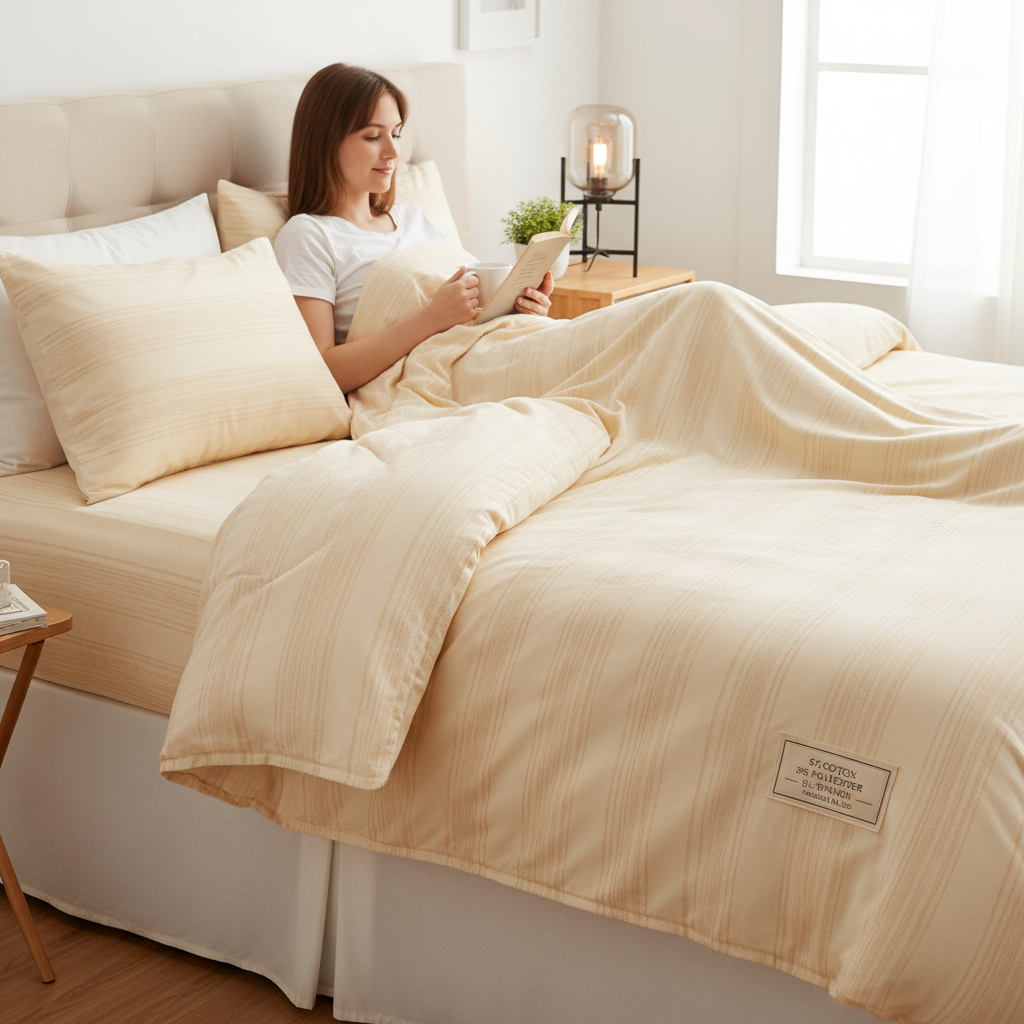
Investing in 57 cotton 38 polyester 5 spandex provides significant long-term economic value. For the consumer, the primary benefit is the extended garment lifecycle. Because the polyester and spandex prevent the cotton from thinning and sagging, clothes made from this blend stay in the "usable" phase much longer than 100% natural fiber garments, reducing the frequency of replacement.
From a sustainability angle, while polyester is a synthetic, the specific ratio in 57 cotton 38 polyester 5 spandex is designed to maximize efficiency. By increasing the lifespan of the garment, we reduce the total volume of textile waste entering landfills. Moreover, the industry is currently transitioning toward using recycled polyester (rPET), which allows this specific blend to be produced with a much lower environmental impact.
The emotional value of this fabric also cannot be overlooked. There is a psychological sense of security and confidence that comes from wearing a garment that fits perfectly throughout the day. Whether it is a firefighter's under-layer or a luxury lounge set, 57 cotton 38 polyester 5 spandex provides a reliable consistency that builds trust between the brand and the end-user.
Future Innovations in Tri-Blend Textiles
The future of 57 cotton 38 polyester 5 spandex is closely tied to the digital transformation of textile manufacturing. With the advent of 3D knitting and precision weaving, we can now distribute these fibers more strategically within a single piece of fabric. For example, increasing the spandex concentration in joints and the polyester concentration in high-wear areas, all while maintaining the overall 57/38/5 ratio.
Additionally, "smart" coatings are being integrated into 57 cotton 38 polyester 5 spandex to add antimicrobial properties or UV protection. This is particularly relevant for outdoor industrial workwear, where the fabric must not only be comfortable and stretchy but also act as a shield against environmental hazards, without compromising the natural feel of the cotton.
Finally, the movement toward a circular economy is pushing for new chemical recycling methods that can separate the cotton, polyester, and spandex at the end of the garment's life. This will ensure that 57 cotton 38 polyester 5 spandex remains a sustainable choice for decades to come, turning old uniforms into new raw materials.
Technical Specification and Performance Analysis of 57 cotton 38 polyester 5 spandex
| Performance Metric |
Testing Method |
Evaluation Score (1-10) |
Industrial Impact |
| Breathability |
Air Permeability Test |
8.5 |
High comfort in humid climates |
| Tensile Strength |
ASTM D5034 |
9.0 |
Reduced tearing in industrial use |
| Elastic Recovery |
Stretch-and-Release Cycle |
9.5 |
No bagging at elbows/knees |
| Wrinkle Resistance |
Crease Recovery Angle |
8.0 |
Low maintenance for uniforms |
| Color Fastness |
Wash-cycle Fade Test |
7.5 |
Consistent branding over time |
| Moisture Wicking |
Vertical Wick Test |
8.0 |
Efficient sweat management |
FAQS
The primary advantage is the combination of durability and shape retention. While 100% cotton is breathable, it shrinks and loses its form over time. 57 cotton 38 polyester 5 spandex utilizes polyester to prevent shrinkage and spandex to ensure the fabric snaps back to its original shape, making it far more suitable for clothing that undergoes frequent movement and washing.
Yes, because the blend contains 57% cotton, it retains the soft, hypoallergenic properties of natural fibers. The polyester and spandex are woven in a way that prevents the synthetic fibers from causing irritation, making 57 cotton 38 polyester 5 spandex a safe and comfortable choice for medical scrubs and base layers.
To preserve the elasticity of the spandex, it is recommended to wash these garments in cool or lukewarm water and avoid high-heat drying. Using a gentle cycle helps maintain the structural integrity of the polyester and prevents the cotton from pilling, ensuring the 57 cotton 38 polyester 5 spandex blend lasts for years.
Actually, the specific ratio of 57 cotton 38 polyester 5 spandex is engineered to reduce pilling. By blending the long-staple cotton with high-tenacity polyester, the fibers are more securely locked in the yarn, which prevents the surface fuzzing typically seen in low-grade synthetic blends.
While it is an all-season fabric, 57 cotton 38 polyester 5 spandex works exceptionally well as a layering piece in winter. The cotton provides initial warmth, while the polyester helps trap heat and the spandex ensures a snug fit that prevents cold drafts from entering the garment.
Yes, many modern mills now offer 57 cotton 38 polyester 5 spandex using Organic Cotton and Recycled Polyester (rPET). This significantly reduces the environmental impact of production while maintaining the exact same performance specifications and feel as the standard version.
Conclusion
In summary, 57 cotton 38 polyester 5 spandex represents a masterclass in textile engineering, successfully blending the breathability of cotton, the strength of polyester, and the flexibility of spandex. By optimizing this ratio, the textile industry has created a material that solves the age-old conflict between comfort and durability, providing an ideal foundation for everything from professional medical attire to modern athleisure.
As we look toward the future, the integration of recycled materials and smart-textile technology will only enhance the value of this blend. For manufacturers and designers seeking a reliable, high-performance fabric that meets the demands of the modern consumer, 57 cotton 38 polyester 5 spandex is the definitive choice for quality and longevity. Visit our website to explore our full range of premium fabrics: www.jiexiangtextile.com