The 60 cotton 40 polyester yarn price is a critical benchmark for garment manufacturers seeking a balance between natural comfort and synthetic durability. In the specialized sector of cotton spinning and finishing, this specific blend is prized for its ability to reduce shrinkage and enhance tensile strength compared to pure cotton yarns.
Procurement managers often face the challenge of volatile raw material costs and varying quality standards across different spinning mills. Understanding the cost drivers for this CVC (Chief Value Cotton) blend allows buyers to optimize their fabric sourcing, whether they are producing high-end shirting or durable uniform fabrics.
This guide provides a detailed analysis of the pricing architecture, technical trade-offs, and selection criteria for 60/40 cotton-poly blends, helping professional buyers make data-driven procurement decisions in the current textile market.

Core Components of CVC Yarn Pricing

The pricing of 60 cotton 40 polyester yarn is primarily dictated by the global commodity index of raw cotton and the petrochemical pricing of polyester chips. Because cotton represents the majority of the blend, price fluctuations in the cotton market have a disproportionate impact on the final cost per kilogram. Polyester acts as a stabilizing agent, typically offering a lower and more predictable cost base than natural fibers.
Beyond raw materials, spinning costs—including energy consumption for carding and ring spinning—add a fixed layer to the pricing. Quality grades, such as combed versus carded yarn, also create significant price tiers. Combed yarns, which remove shorter fibers, command a premium due to their smoother finish and higher strength.
Technical Advantages of the 60/40 Ratio
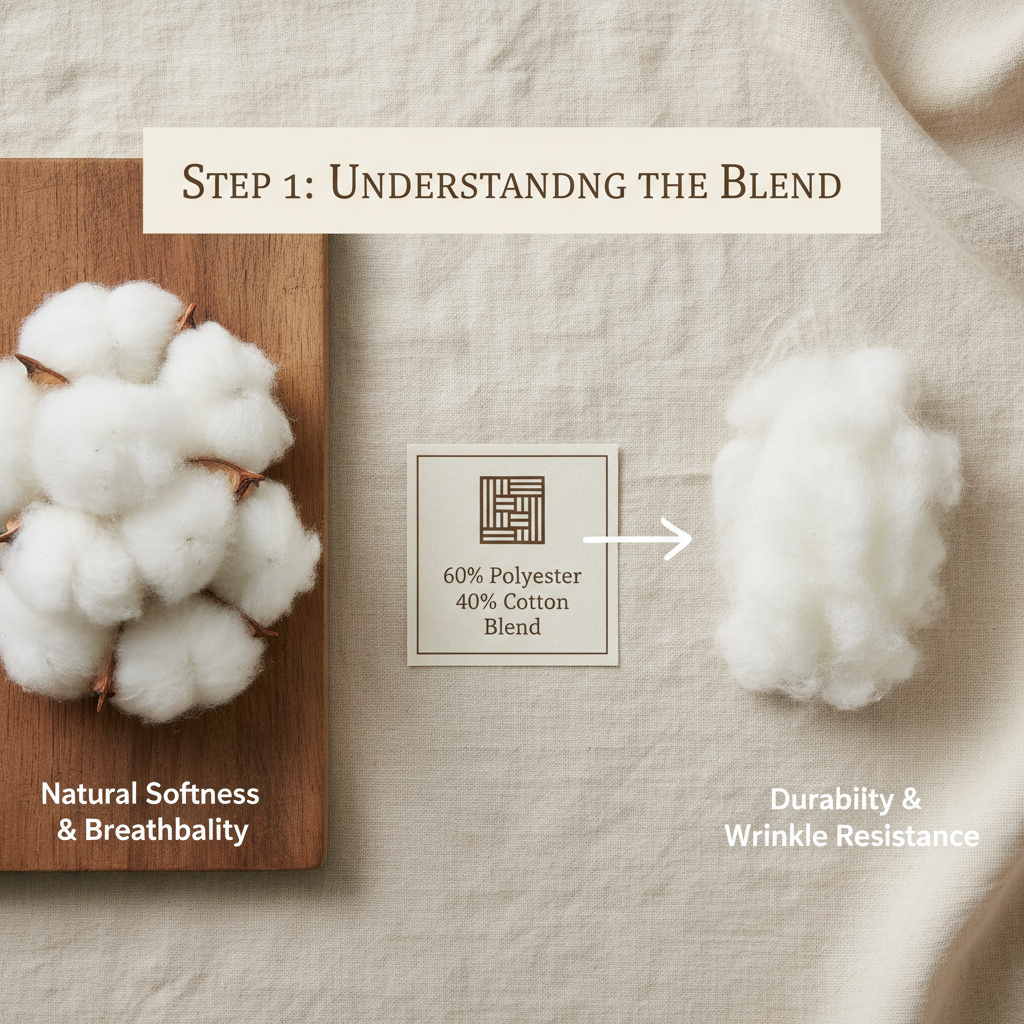
A 60% cotton and 40% polyester blend is engineered to capture the "best of both worlds." The high cotton content ensures breathability and moisture absorption, which are essential for wearer comfort. Simultaneously, the 40% polyester integration provides critical structural integrity, making the resulting fabric significantly more resistant to wrinkles and shrinkage than 100% cotton alternatives.
From a manufacturing perspective, this blend improves the efficiency of the weaving process. The polyester fibers reduce the frequency of yarn breakages on high-speed looms, increasing overall throughput. This technical synergy results in a fabric that is not only more durable but also easier to maintain, requiring less ironing and showing less wear over time.
Primary Industrial Applications
The versatility of 60/40 blend yarns makes them a staple in the production of professional attire and high-use garments. One of the most prominent applications is in the manufacturing of uniforms and professional wear, where a balance of a "cotton feel" and industrial durability is required. This blend is frequently used for shirting fabrics that must withstand frequent industrial laundering without losing their shape.
Additionally, this yarn is foundational for various functional fabrics. For instance, in the production of TR fabrics or specialized blends, the integration of polyester helps in achieving stable sizing. Shijiazhuang Jiexiang Textile Co., Ltd. leverages extensive spinning and weaving capacity to produce a wide array of grey and finished fabrics that utilize these blend principles to serve markets in North America, Europe, and the Middle East.
Comparative Cost Impact Analysis
When evaluating the 60 cotton 40 polyester yarn price, it is useful to look at the relative cost drivers. The following conceptual framework illustrates how different factors contribute to the total cost of the blend compared to a baseline. This normalized index shows the weight of raw materials versus processing costs.
The data indicates that raw cotton procurement remains the dominant cost driver. Processing costs, while significant, are more stable. The "Blend Efficiency" factor represents the cost savings achieved through reduced waste and higher loom efficiency when using polyester-blended yarns compared to pure cotton.
Evaluating Supplier Production Capacity
For large-scale procurement, the technical capacity of the mill is as important as the unit price. A manufacturer's ability to maintain consistency across thousands of spindles is a key indicator of quality. For example, facilities with advanced cotton spindles—such as the 40,000+ spindles operated by Shijiazhuang Jiexiang Textile—can ensure more uniform yarn tension and fewer defects in the final fabric.
Buyers should also evaluate the vertical integration of the supplier. A company that manages spinning, weaving, printing, and dyeing in-house can typically offer more competitive pricing by eliminating middleman margins and reducing logistics costs between different stages of production. This integrated approach also allows for tighter quality control over the final fabric's hand-feel and color fastness.
Common Risks in Yarn Procurement
The most significant risk in sourcing 60/40 blends is "composition drift," where the actual ratio of cotton to polyester deviates from the specification. This can lead to fabrics that either shrink too much (excess cotton) or feel overly synthetic and lack breathability (excess polyester). Strict laboratory testing of the yarn composition is essential before bulk weaving.
Another risk involves the quality of the polyester fiber used. Low-grade polyester can lead to increased pilling and a "shiny" appearance that is undesirable for professional shirting. Buyers must specify the type of polyester (e.g., semi-dull or bright) to ensure the final product meets the aesthetic requirements of the end consumer.
Procurement Decision Framework
Choosing between different blend options requires a trade-off analysis between cost, durability, and comfort. The following table compares the 60/40 blend against other common industry standards to help buyers align their choice with the intended application.
| Blend Type | Breathability | Durability | Cost Level |
|---|---|---|---|
| 100% Cotton | Excellent | Moderate | Highest |
| 60% C / 40% P | High | High | Medium |
| 50% C / 50% P | Moderate | Very High | Lower |
| 35% C / 65% P | Low | Maximum | Lowest |
| Poly/Viscose | Moderate | High | Medium |
| 100% Polyester | Low | Maximum | Lowest |
Ultimately, the 60/40 blend is the optimal choice for products that require a natural appearance and feel but must endure rigorous daily use. By balancing these dimensions, manufacturers can maximize the value proposition for their end customers.
Frequently Asked Questions
The primary driver is the global raw cotton price index. Since cotton makes up 60% of the blend, any shortage in cotton crops or changes in trade tariffs on natural fibers immediately impact the cost.
The 40% polyester component acts as a structural anchor, significantly reducing the shrinkage rate during washing and drying compared to pure cotton fabrics.
Yes, cotton-poly blends are often used in medical scrubs and gowns because they provide the comfort of cotton with the durability and easy-wash characteristics of polyester.
Combed yarn undergoes an extra process to remove short fibers and impurities, resulting in a smoother, stronger yarn with a higher price point than carded yarn.
Since cotton and polyester require different dyes, a 60/40 blend typically requires a "two-bath" dyeing process or specialized disperse dyes to ensure a uniform color across both fiber types.
The higher cotton percentage (60%) provides a more natural hand-feel and better moisture wicking, which is preferred for clothing worn directly against the skin.
Conclusion
Navigating the 60 cotton 40 polyester yarn price requires a comprehensive understanding of raw material volatility and the technical requirements of the final fabric. By selecting a vertically integrated manufacturer with high spindle capacity and strict composition controls, buyers can secure a product that balances cost-efficiency with high performance in durability and comfort.
For professional procurement of high-quality blends and finished fabrics, you can review the available product range and technical capabilities at www.jiexiangtextile.com to find a solution tailored to your specific industrial application.