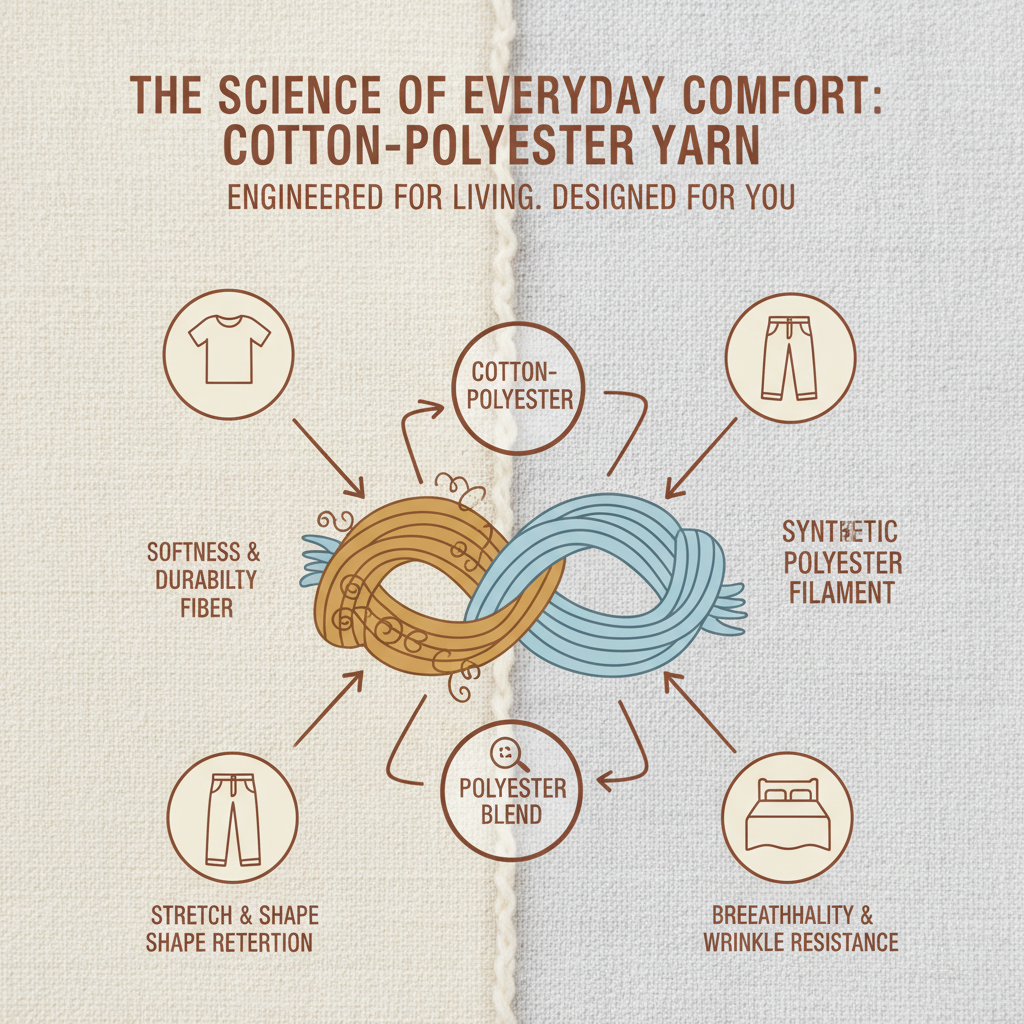
Selecting a textile for bulk production often involves a critical trade-off between the natural comfort of cotton and the industrial resilience of synthetics. For procurement managers and designers, finding a material that balances these opposing traits is a constant challenge in the global supply chain.
The rise of blended textiles has shifted the market, allowing for the optimization of fabric performance based on specific end-use requirements. Whether it is for high-traffic corporate uniforms or durable home upholstery, the synergy between polyester and cotton creates a versatile base that outperforms single-fiber textiles in longevity and maintenance.
To navigate these options effectively, it is essential to understand the technical nuances of china poly cotton and how different weaving processes impact the final product's utility and feel.


Historically, the textile industry relied heavily on pure natural fibers. However, the introduction of synthetic polymers like polyester revolutionized the sector by introducing unmatched tensile strength and wrinkle resistance. In the context of Chinese manufacturing, the integration of these fibers allowed for the mass production of textiles that could survive industrial wear while remaining breathable.
This shift wasn't just about cost; it was about functional engineering. By blending cotton's softness with polyester's durability, manufacturers created a material that reduced the need for frequent replacements, thereby lowering the long-term cost of ownership for institutional buyers.
The performance of a poly-cotton blend is dictated by the spinning and weaving process. When fibers are blended at the spinning stage, the resulting yarn possesses a hybridized set of properties. Polyester provides the structural skeleton, preventing the fabric from shrinking or stretching excessively, while the cotton fills the gaps to ensure moisture absorption and skin comfort.
From a technical standpoint, the weave density (measured in threads per inch) determines the fabric's opacity and wind resistance. For instance, a gabardine weave creates a tight, diagonal ribbing that is ideal for uniform fabrics, offering a professional appearance combined with high abrasion resistance.
Moreover, the finishing process—including bleaching, dyeing, and printing—is where the aesthetic value is added. The ability of polyester to hold synthetic dyes allows for vibrant, fade-resistant colors, while the cotton component ensures that the fabric does not feel "plastic" or overly synthetic to the touch.
In professional textile procurement, "grey fabric" refers to the raw material straight from the loom, before any bleaching or dyeing. This state is crucial for manufacturers who require specific customized finishes. Using a grey fabric base allows for maximum flexibility in the final product's specifications.
Polyester grey fabric serves as a strategic foundation in textile manufacturing because its neutral state and high structural integrity make it a chameleon for any subsequent dyeing or coating process.
For large-scale operations, sourcing grey fabric reduces inventory risk. Instead of stocking hundreds of colored rolls, a factory can maintain a stock of grey base and apply colors on-demand. This efficiency is a hallmark of experienced producers like Shijiazhuang Jiexiang Textile Co., Ltd., which utilizes advanced air jet looms to maintain consistency across millions of meters of fabric.
The ratio of polyester to cotton significantly alters the fabric's behavior. A higher polyester content increases the fabric's lifespan and resistance to stains but can reduce its breathability. Conversely, increasing the cotton percentage enhances comfort and hypoallergenic properties but makes the material more prone to wrinkling and shrinkage.
To assist in selection, we can look at a relative performance index across five key textile metrics. This conceptual framework helps buyers determine which blend ratio aligns with their specific operational environment, whether it is a sterile medical setting or a rugged industrial site.
In a typical industrial setting, such as a manufacturing plant, workers require uniforms that can withstand abrasive surfaces and frequent industrial laundering. Here, a high-density poly-cotton gabardine is preferred because it maintains its shape and color even after hundreds of wash cycles, reducing the overhead cost of garment replacement.
In contrast, home textile applications, such as curtains or cushions, prioritize a blend of aesthetics and low maintenance. A polyester-rich grey fabric is often selected for modern interior design because it offers a neutral palette that blends with various decors while remaining stain-resistant and easy to clean with a simple wipe-down.
The textile industry is facing increasing pressure to reduce its environmental footprint. One of the most significant advancements in this area is the shift toward recycled polyester (rPET). By sourcing polymers from post-consumer plastic waste, manufacturers can significantly reduce the reliance on petroleum-based virgin polyester.
Integrating recycled fibers into china poly cotton blends does not necessarily mean a compromise in quality. Modern recycling technologies allow for the creation of fibers that match the strength and luster of traditional polyester, making sustainable choices viable for high-end fashion and industrial use.
For procurement officers, prioritizing recycled blends is no longer just an ethical choice but a strategic one. Many global markets now impose stricter regulations on textile waste, and adopting sustainable materials ensures long-term compliance and appeals to an eco-conscious consumer base.
When evaluating different fabric options, buyers must avoid the mistake of focusing solely on price per meter. The true value of a textile is found in its "cost-per-use," which factors in durability, maintenance requirements, and the lifespan of the finished product.
A structured approach to selection involves mapping the required environmental conditions—such as exposure to moisture, sunlight, or mechanical friction—against the technical properties of the fabric. For example, outdoor furniture requires higher moisture resistance, whereas office shirting requires higher breathability.
The following table provides a relative suitability guide for different fabric types based on common industrial and commercial requirements, ensuring that the material chosen aligns with the intended application.
| Fabric Type | Abrasion Resistance | Breathability | Maintenance Level | Ideal Use Case |
|---|---|---|---|---|
| Poly-Cotton Gabardine | High | Medium | Low | Workwear/Uniforms |
| Polyester Grey Fabric | High | Medium | Very Low | Upholstery/Curtains |
| Spandex Blends | Medium | High | Medium | Activewear/Medical |
| Pure Cotton Voile | Low | Very High | High | Lightweight Apparel |
| Rayon Blends | Medium | High | Medium | Fashion Shirting |
| TR Fabric | High | Medium | Low | Corporate Suits |
Grey fabric is the raw, untreated textile that comes directly off the loom. It contains natural impurities and has not undergone bleaching, dyeing, or shrinking processes. Finished fabric is the result of these subsequent treatments, which give the material its final color, texture, and functional properties. Buying grey fabric is typically more cost-effective for bulk buyers who have their own dyeing facilities or require highly specific custom finishes.
To maintain the structural integrity of poly-cotton blends, machine washing in cold or lukewarm water is recommended. Because polyester is sensitive to extreme heat, it is advisable to tumble-dry on low settings or air-dry. High heat can cause the synthetic fibers to glaze or shrink, which ruins the fabric's hand-feel. If ironing is necessary, use a low-to-medium heat setting to prevent scorching the synthetic components.
Yes, particularly if the polyester content is high. Polyester is naturally more resistant to moisture and UV degradation than pure cotton. When used for outdoor cushions or accessories, poly-cotton blends provide a good balance of comfort and weather resistance. However, for extreme outdoor exposure, it is recommended to check if the fabric has received additional UV-protective coatings to prevent long-term fading.
Breathability is primarily driven by the cotton component, which is naturally hydrophilic and allows air and moisture to pass through. As the percentage of polyester increases, the fabric becomes more wind-resistant and durable, but less breathable. For summer apparel, a higher cotton ratio is preferred; for industrial uniforms where durability is the priority, a higher polyester ratio is standard to ensure the garment survives heavy usage.
Polyester is generally hypoallergenic as it is a synthetic fiber that does not harbor dust mites or allergens as easily as some natural fibers. When blended with high-quality cotton, the resulting fabric is usually safe for most skin types. However, individuals with extreme sensitivities to synthetic polymers should perform a patch test or seek out organic cotton blends with certified non-toxic dyes to ensure complete skin compatibility.
Recycled polyester (rPET) significantly reduces the environmental load by diverting plastic bottles and waste from landfills and oceans. It also requires less energy and water during production compared to virgin polyester, which is derived from petroleum. By choosing recycled blends, manufacturers can lower their carbon footprint without sacrificing the technical performance of the textile, making it a sustainable alternative for the modern supply chain.
The strategic selection of china poly cotton and related blended fabrics is a fundamental decision that affects both the operational efficiency and the end-user experience. By understanding the relationship between fiber ratios, weave types, and the utility of grey fabric bases, procurement professionals can optimize their supply chains for both cost and performance.
As the industry moves toward a more sustainable future, the integration of recycled materials and high-efficiency production methods will define the next generation of textiles. Prioritizing quality and technical alignment over simple cost-cutting ensures that the final products remain durable, functional, and environmentally responsible.