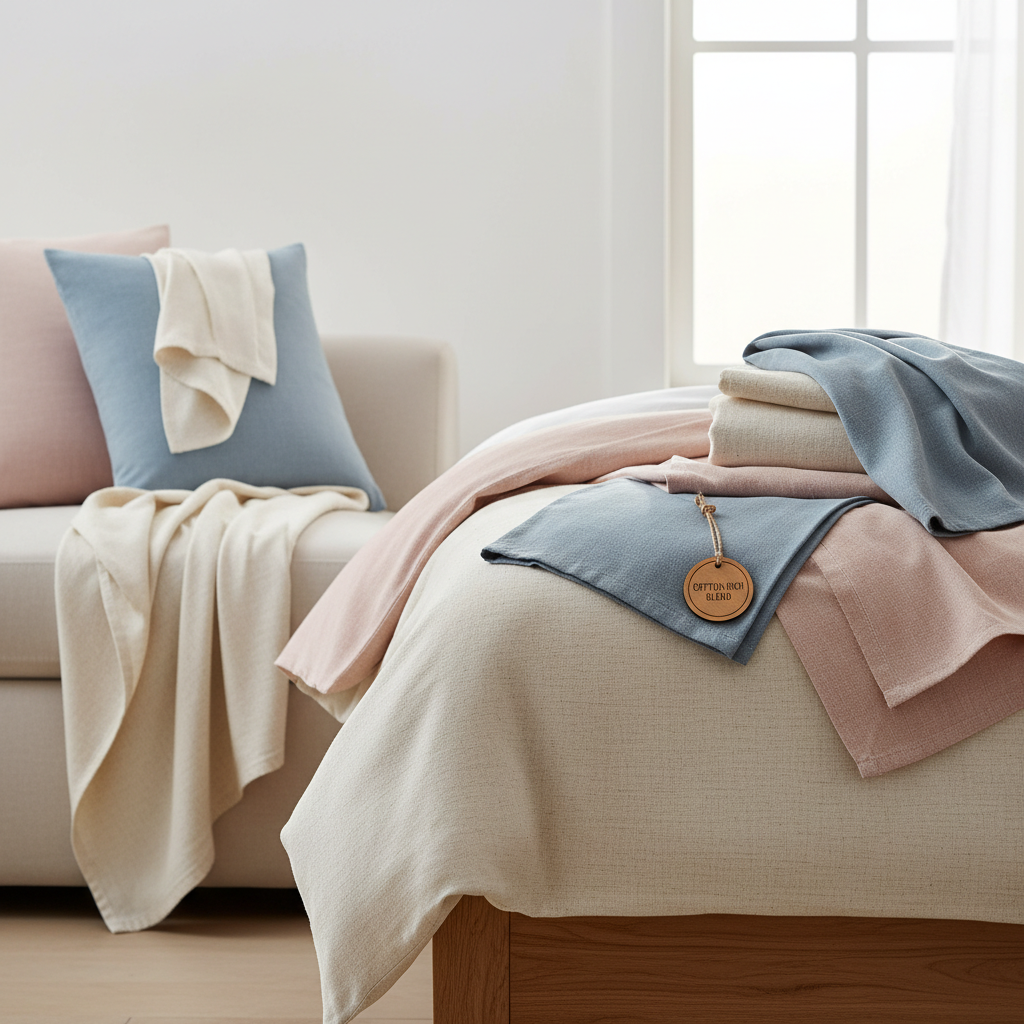
In the evolving landscape of global textile manufacturing, the demand for specific fabric weights and compositions has led to a sophisticated understanding of material density. One such benchmark is the 260 gsm cotton, a specification that represents a balance between structural integrity and breathable comfort. For designers and procurement officers, understanding the precise grams per square meter (GSM) is crucial for ensuring the final garment meets quality and performance standards.
The global textile industry, as monitored by organizations like the International Textile Manufacturers Federation, increasingly prioritizes the standardization of fabric weights to facilitate international trade and consistent production. Whether it is for heavy-duty apparel or structured fashion, the specific density of a fabric determines its drape, opacity, and durability. The move toward precise GSM specifications allows factories to minimize waste and maximize the efficiency of raw material usage across various climates and markets.
While many are searching for the versatility of 260 gsm cotton, the actual requirements of fashion-forward apparel often lead professionals toward high-quality rayon alternatives. For instance, 100% rayon printed fabrics offer a fluid drape and vibrant color saturation that heavier cottons cannot replicate, making them ideal for ladies' dresses and shirts where elegance is the primary objective.
The Industrial Standard of 260 gsm cotton
The technical designation of 260 gsm cotton refers to a fabric that weighs 260 grams per square meter, placing it in the mid-to-heavyweight category. This weight is often sought after for garments that require more structure than a standard t-shirt but less bulk than a heavy canvas, making it a staple for high-quality uniforms and structured leisurewear.
In the manufacturing process, achieving this specific density requires precise control over yarn count and weaving tension. While our current premium offering focuses on 100% rayon fabrics with weights ranging from 90-130G/LM for maximum fluidity in dresses and shirts, the industry's obsession with the 260 gsm cotton benchmark highlights the ongoing need for diverse weight options in the global textile supply chain.
Material Composition and Density Logic
Understanding density begins with the relationship between the fiber's natural properties and the weaving technique used. A fabric labeled as 260 gsm cotton relies on the inherent thickness of cotton fibers and a tight interlacing pattern to reach its weight. This creates a textile that is naturally durable, opaque, and capable of holding a shape, which is essential for tailored clothing.
Conversely, the logic of lightweight fabrics, such as the rayon challis or poplin used in our 90-130G/LM fabrics, is to prioritize breathability and a "liquid" drape. While a heavy cotton provides protection and structure, rayon offers a sophisticated softness and a cooling effect on the skin, which is why it is the preferred choice for ladies' fashion, sleepwear, and Muslim clothing.
The choice between a heavy-duty 260 gsm cotton and a lightweight rayon depends entirely on the end-use. For a structured jacket, density is key; for a flowing summer dress or a delicate hair band, the lightweight nature of rayon (often under 130 GSM) provides the necessary comfort and movement.
Comparative Analysis: Cotton vs Rayon Weights
When comparing the tactile experience of 260 gsm cotton with lighter alternatives, the most immediate difference is the "hand-feel." Heavy cotton feels substantial and slightly rigid, providing a sense of security and warmth, whereas rayon is prized for its silk-like luster and lightness.
From a technical standpoint, the 260 gsm cotton offers higher abrasion resistance, but it lacks the moisture-wicking elegance of rayon. Our factory specializes in rayon fabrics with yarn counts of 30S to 60S, ensuring that the fabric remains lightweight yet durable enough for high-fashion printing and customized designs.
Ultimately, the decision to use 260 gsm cotton or a lightweight rayon involves a trade-off between structure and flow. Designers who want their garments to skim the body and move with the wind will always opt for the lower GSM rayon options, while those building a durable wardrobe base will look toward the heavier cotton benchmarks.
Performance Metrics for Heavy Fabrics
Performance in textiles is measured by how a fabric reacts to stress, washing, and wear over time. A 260 gsm cotton typically scores high in durability and opacity, meaning it does not show undergarments and resists tearing under moderate pressure. This makes it an industrial favorite for workwear and heavy shirts.
However, the performance of fabric is not just about strength, but about suitability. In the realm of fashion design, "performance" often means how well a fabric takes a print or how it handles a drape. For these metrics, the lightweight rayon we provide outperforms heavy cottons, offering superior color vibrancy and a soft, feminine silhouette.
Performance Comparison of 260 gsm cotton and Rayon
Global Application and Market Demand
The demand for 260 gsm cotton is strongest in regions with transitional climates or in industries requiring protective yet comfortable apparel. In Europe and North America, this weight is frequently used for high-end loungewear and boutique basics that promise longevity.
Simultaneously, there is a massive global shift toward lightweight, printed fabrics for the Asian and Middle Eastern markets. Our 100% rayon fabrics, designed for dresses, shirts, and Muslim cloth, cater to this demand by offering a lightweight alternative to the heavy feel of 260 gsm cotton, ensuring that style does not come at the cost of thermal comfort in hot climates.
Sustainability and Long-term Value
Investing in a 260 gsm cotton means investing in durability. Because of its weight, these garments tend to have a longer lifecycle, reducing the need for frequent replacement and thus lowering the overall environmental footprint of the consumer's wardrobe.
However, sustainability also encompasses the efficiency of production. By using high-quality viscose and rayon, manufacturers can create lightweight garments that use less raw material per unit while maintaining a high perceived value through superior printing and design. This creates a different kind of sustainability—one based on resource optimization.
The long-term value of choosing the right GSM, whether it is the robust 260 gsm cotton or our elegant 100% rayon, lies in the alignment of material properties with the garment's purpose. When the material matches the function, the result is a product that lasts longer and satisfies the customer more deeply.
Future Innovations in Fabric Weighting
The future of textiles is moving toward "intelligent weighting," where fibers are engineered to provide the strength of 260 gsm cotton but with the weight and breathability of a much lighter fabric. This involves the use of nano-coatings and advanced polymer blends that increase tensile strength without adding bulk.
Automation in weaving and printing is also allowing for more precise customization. While a standard 260 gsm cotton is uniform, future fabrics may feature variable density—thicker in high-wear areas and lighter in areas requiring flexibility—all within a single piece of cloth.
As we continue to refine our rayon and viscose offerings, we are focusing on integrating these digital design capabilities. By allowing customers to customize their designs and colors on our high-quality rayon bases, we bridge the gap between the industrial reliability of heavy cottons and the artistic freedom of lightweight fashion fabrics.
Analysis of Material Characteristics: Heavy Cotton vs Lightweight Rayon
|
Material Type
|
Weight Range (GSM)
|
Primary Use Case
|
Durability Score (1-10)
|
|
260 gsm cotton
|
260
|
Structured Uniforms
|
9
|
|
Rayon Challis
|
90-130
|
Summer Dresses
|
6
|
|
Rayon Poplin
|
110-130
|
Ladies Shirts
|
7
|
|
Rayon Satin
|
120-140
|
Luxury Sleepwear
|
6
|
|
Light Cotton Mix
|
150-180
|
Casual T-shirts
|
8
|
|
Heavy Denim
|
350+
|
Industrial Pants
|
10
|
FAQS
The main difference lies in weight, drape, and purpose. 260 gsm cotton is a heavyweight fabric providing structure and durability, ideal for uniforms or thick shirts. In contrast, lightweight rayon (90-130 GSM) is designed for fluidity and breathability, making it the superior choice for ladies' dresses, sleepwear, and fashion apparel that requires a soft, flowing silhouette.
Generally, 260 gsm is considered too heavy for peak summer heat if the garment is a tight fit. While cotton is breathable, the density of 260 GSM can trap more heat than a lightweight fabric. For summer fashion, we recommend our 100% rayon printed fabrics, which provide the necessary lightness and cooling effect for warm climates.
Choose your GSM based on the desired "fall" of the garment. For structured items like blazers or heavy trousers, look for 260 GSM or higher. For garments that should skim the body, such as blouses or maxi dresses, a weight between 90-130 GSM (common in our rayon line) is ideal. Always consider the yarn count (e.g., 30S, 60S) to determine the fineness of the weave.
Both can be printed, but the results differ. Heavy cotton takes ink deeply and is great for bold, graphic prints. Rayon, however, is renowned for its ability to produce vivid, high-contrast colors and intricate fashion designs with a smooth finish. Our rayon printing process is specifically optimized for high-fashion ladies' wear.
For our premium 100% rayon printed fabrics, the minimum order quantity (MOQ) is typically 2000 meters per color, with 3-4 colorways per design and a total order of 12,000 meters. This ensures a consistent dye lot and high-quality production across the entire batch.
Typically, our delivery detail for customized rayon and viscose fabrics is approximately 10-15 days. This allows for precise printing and quality control to ensure the fabric meets the specific weight and design requirements of the client before shipping.
Conclusion
In summary, while 260 gsm cotton serves as a vital industrial benchmark for durability and structure, the modern fashion market increasingly demands the versatility and elegance of lightweight materials. By balancing the technical requirements of fabric weight—ranging from the heavy-duty stability of cotton to the fluid grace of 100% rayon—manufacturers can cater to a diverse array of needs, from industrial workwear to high-end ladies' fashion.
As the textile industry moves toward a future of customized, sustainable, and intelligent materials, the ability to precisely control GSM and fiber composition will remain the key to commercial success. We encourage designers and wholesalers to explore the synergy between different fabric weights to create garments that are not only aesthetically pleasing but functionally superior. For premium fabric solutions, visit our website: www.jiexiangtextile.com