
Comprehensive Guide to Selecting the Best Kinds of Fabric for Uniform Applications
Choosing the Right Fabrics for Uniforms
Selecting the appropriate fabric for uniforms is crucial for comfort, durability, and maintaining a professional appearance. The optimal choice depends heavily on the industry, work environment, and specific requirements. From breathable cotton blends to resilient synthetics, understanding the properties of different fabrics is key to making an informed decision. At Jiexiang Textile, we specialize in providing high-quality fabrics tailored for diverse uniform needs. This guide will explore the most common and effective fabric options for various applications.

Understanding the Core Properties of Uniform Fabrics
Before diving into specific fabric types, it's essential to understand the key properties that influence performance. These include breathability (allowing air circulation), durability (resistance to wear and tear), wrinkle resistance (maintaining a neat appearance), colorfastness (resistance to fading), and ease of care (washing and maintenance). Different fabrics excel in different areas, making the selection process dependent on prioritizing these characteristics. For example, a uniform for outdoor workers will prioritize durability and weather resistance, while a uniform for a hospitality setting might prioritize comfort and wrinkle resistance. Understanding these trade-offs is important when selecting a fabric from our extensive catalog.
Key Fabric Properties: Breathability, Durability, Wrinkle Resistance, Colorfastness, Ease of Care.
The Versatility of Cotton and Cotton Blends
Cotton remains a popular choice for uniforms due to its comfort, breathability, and affordability. However, 100% cotton is prone to wrinkling and shrinking. Therefore, cotton blends – combining cotton with polyester or other synthetic fibers – are often preferred. These blends offer the comfort of cotton with improved durability, wrinkle resistance, and colorfastness. Cotton blends are ideal for industries where comfort is paramount, such as healthcare, hospitality, and office environments. Different blend ratios can further refine the fabric’s properties. A higher polyester content will increase durability and wrinkle resistance, while a higher cotton content will enhance breathability. Explore Jiexiang Textile’s cotton blend options to find the perfect balance.
Polyester: The Durable and Low-Maintenance Option
Polyester is a synthetic fabric known for its exceptional durability, wrinkle resistance, and resistance to shrinking and fading. It’s also relatively inexpensive. While not as breathable as cotton, modern polyester fabrics are often engineered with moisture-wicking properties, making them suitable for active work environments. Polyester is a great choice for uniforms that require frequent washing and minimal ironing, such as those used in security, transportation, and industrial settings. Jiexiang Textile offers a variety of polyester fabrics in different weights and textures to suit various uniform styles.
Kinds of Fabric for Uniform: A Comparative Overview
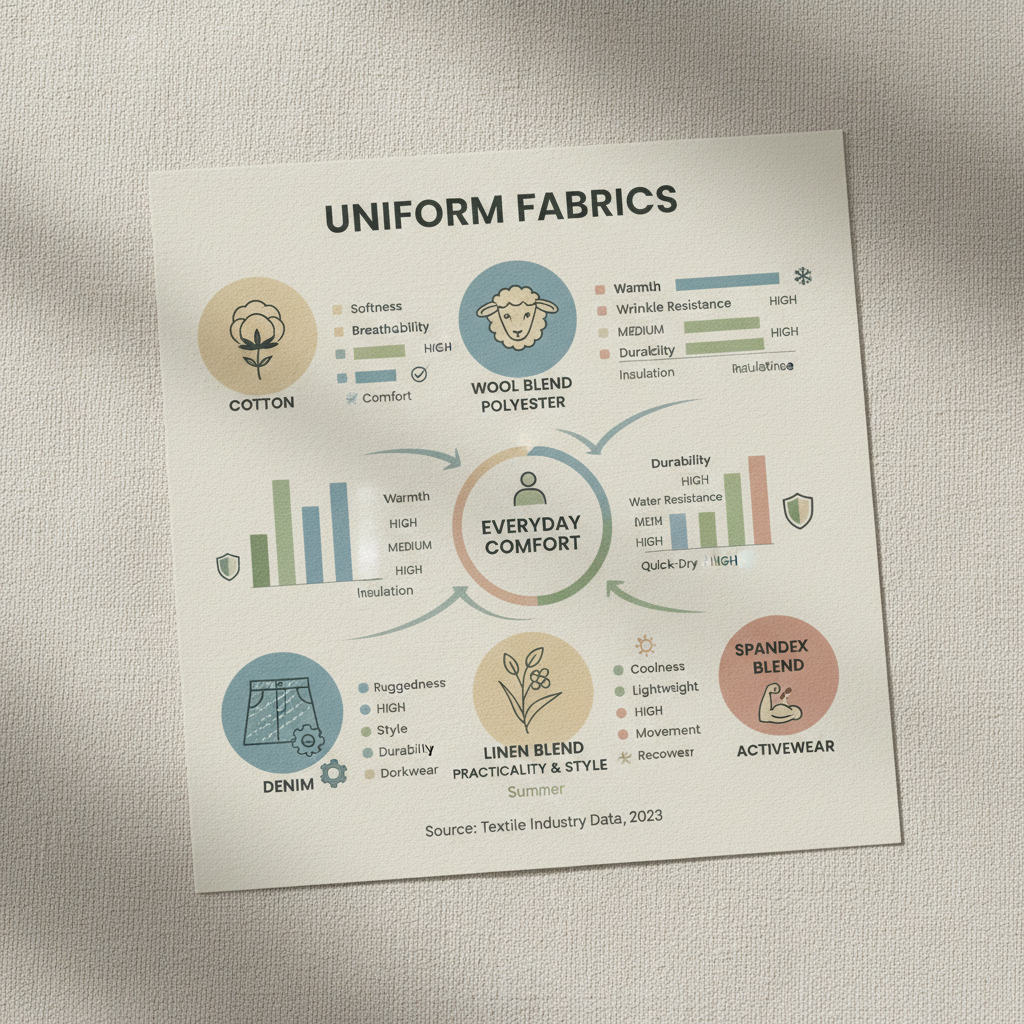
To help you visualize the key differences, here's a comparison of popular uniform fabrics:
Specialty Fabrics for Specific Needs
Beyond the standard options, several specialty fabrics cater to unique requirements. These include:
- Ripstop: A woven fabric with a reinforced pattern that prevents tearing, ideal for demanding environments.
- Twill: A durable and visually appealing fabric with a diagonal rib pattern, often used for more formal uniforms.
- Moisture-Wicking Fabrics: Designed to draw sweat away from the body, enhancing comfort in hot or active conditions.
- Flame-Resistant Fabrics: Essential for industries with fire hazards, providing crucial protection.
Conclusion: Finding the Perfect Fabric with Jiexiang Textile
Choosing the right fabric for your uniforms is a critical decision impacting comfort, performance, and brand image. At Jiexiang Textile, we offer a comprehensive range of high-quality fabrics, expert advice, and customized solutions to meet your specific needs. Contact us today to discuss your uniform requirements and discover the perfect fabric for your team.
Frequently Asked Questions (FAQs)
What is the best fabric for outdoor work uniforms?
For outdoor work uniforms, durability and weather resistance are key. Polyester blends, particularly those with ripstop construction, are excellent choices. These fabrics are resistant to tearing, fading, and shrinking, and can withstand harsh weather conditions. Consider fabrics with moisture-wicking properties to enhance comfort during physical activity. At Jiexiang Textile, we offer several polyester and blend options specifically designed for outdoor use.
How do I choose between cotton and polyester for my uniforms?
The choice between cotton and polyester depends on your priorities. Cotton offers superior comfort and breathability but is less durable and wrinkles easily. Polyester is more durable, wrinkle-resistant, and affordable, but less breathable. Cotton blends offer a compromise, combining the benefits of both fabrics. Consider the work environment and the level of physical activity when making your decision. If comfort is paramount and the work is light, cotton or a cotton-rich blend is a good choice. If durability and low maintenance are essential, polyester is the better option.
Are flame-resistant fabrics necessary for all industries?
Flame-resistant fabrics are crucial in industries with a high risk of fire, such as oil and gas, welding, and electrical work. They provide a vital layer of protection, minimizing the risk of burns in the event of an accident. However, they are not necessary for all industries. The need for flame-resistant fabrics should be determined by a thorough risk assessment of the workplace. Jiexiang Textile offers a range of certified flame-resistant fabrics to meet industry standards.
How can I ensure the longevity of my uniforms?
Proper care is essential for extending the lifespan of your uniforms. Follow the manufacturer's washing instructions carefully. Avoid harsh detergents and excessive heat. Regularly inspect uniforms for damage and repair them promptly. Consider implementing a uniform rotation system to reduce wear and tear on individual garments. Selecting high-quality fabrics from a reputable supplier, like Jiexiang Textile, will also contribute to their longevity.
-
Guide to Finding the Best Premium cotton suit material onlineNewsApr.16,2026
-
Premium White Cotton Fabric Wholesale Guide for BusinessesNewsApr.09,2026
-
Discover Premium Cotton Curtain Fabric Online for Beautiful HomesNewsApr.07,2026
-
Understanding Uniform Type of Fabric for Global Trade and Quality AssuranceNewsMar.31,2026
-
Comprehensive Guide to Different Types of Tela for Uniform SelectionNewsMar.28,2026
-
Comprehensive Guide to Selecting the Best Types of Fabric for UniformNewsMar.26,2026
-
Comprehensive Guide to Selecting the Best Types of Fabric for Office UniformNewsMar.24,2026